Foreword
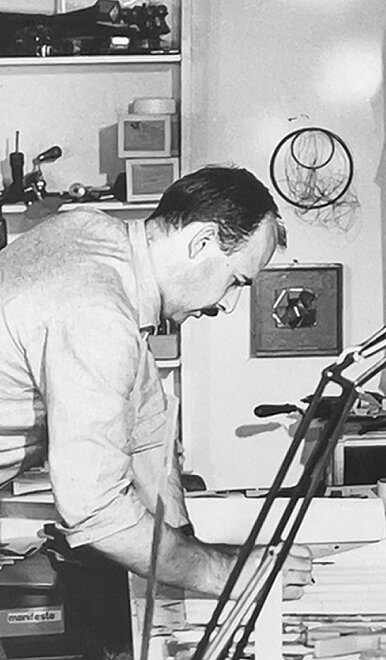
Christian Megert (born 1936, in Bern) is a Swiss sculptor, object- and kinetic artist. His artistic practice is characterised by his ongoing exploration of space in art. As he puts it in his 1961 manifesto “A New Space”, he wants to build a space that would no longer require art, since it is art in itself — a space without beginning or end. Using reflective surfaces in his wall installations and environments, the artist creates seemingly infinite spaces with no fixed beginning or end. Megert has been working with mirrors as an artistic medium since 1960. This makes him one of the pioneers in the use of this material in art.
Christian Megert’s sustained engagement with the mirror reveals a nuanced and reflective approach to the representation of space, time, and reality in art. His work is considered part of the European avant-garde that coalesced around the ZERO movement. ZERO saw itself as a utopian vision of art that intervenes in life and was directed against the conservative forces seeking to rebuild everything exactly as it had been before World War II. The artistic movement made use of a minimalist visual language, smooth materials, light, technology, and movement. In keeping with this context, Megert’s works embody reduction and a new, immaterial conception of space. His work continues to embody these values even after ZERO disbanded in 1966, and to this day it is characterised by the consistency and perseverance with which he pursues his artistic themes.
Megert lives and works in Düsseldorf and Bern. With few interruptions, his artistic life has unfolded between these two cities. Born in Bern, the Swiss artist has remained closely connected to his hometown. Since 1973, Düsseldorf has formed the second axis of his life and work. In 1976 he was appointed Professor of “Integration of Fine Arts and Architecture” at the Kunstakademie Düsseldorf, a position he held until 2002. Although deeply familiar with both cities, Megert’s work resists regional classification. It is best understood as international in scope — an attitude consistent with his self-image as a European artist who combines cultural rootedness with critical distance.
1936–1955
Early Years
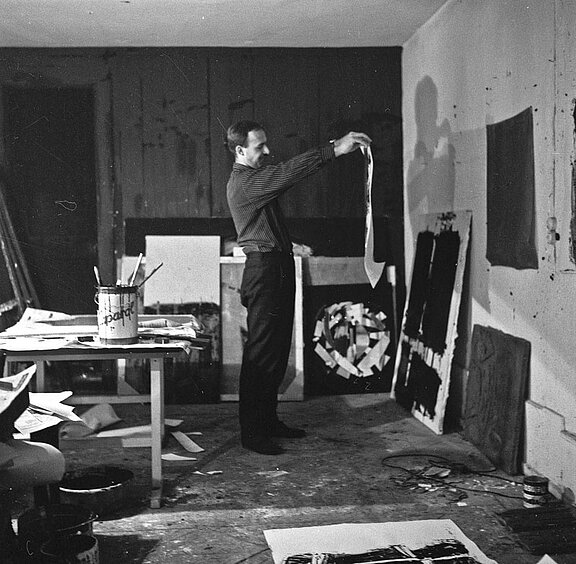
Although Christian Megert did not grow up in a family with an affinity for art, Megert was already friends with aspiring artists while still in professional training. At sixteen, he planned to become a structural engineer, a profession grounded in construction and spatial thinking. As preparation, he completed an apprenticeship as a bricklayer while attending the Bern Vocational School from 1952 to 1956. There he also enrolled in free courses in drawing and color theory. These studies were initially pragmatic rather than artistic, yet they placed him in an ambitious milieu. There he met the artists Ueli and Susi Berger, and encountered former students Marcel Wyss and Dieter Roth, whose openness to Concrete Art and conceptual thinking would prove formative.
Although Christian Megert did not grow up in a family with an affinity for art, Megert was already friends with aspiring artists while still in professional training. At sixteen, he planned to become a structural engineer, a profession grounded in construction and spatial thinking. As preparation, he completed an apprenticeship as a bricklayer while attending the Bern Vocational School from 1952 to 1956. There he also enrolled in free courses in drawing and color theory. These studies were initially pragmatic rather than artistic, yet they placed him in an ambitious milieu. There he met the artists Ueli and Susi Berger, and encountered former students Marcel Wyss and Dieter Roth, whose openness to Concrete Art and conceptual thinking would prove formative.
Although Christian Megert did not grow up in a family with an affinity for art, Megert was already friends with aspiring artists while still in professional training. At sixteen, he planned to become a structural engineer, a profession grounded in construction and spatial thinking. As preparation, he completed an apprenticeship as a bricklayer while attending the Bern Vocational School from 1952 to 1956. There he also enrolled in free courses in drawing and color theory. These studies were initially pragmatic rather than artistic, yet they placed him in an ambitious milieu. There he met the artists Ueli and Susi Berger, and encountered former students Marcel Wyss and Dieter Roth, whose openness to Concrete Art and conceptual thinking would prove formative.
1954–1956
Toward Abstraction
Due to early independence from his childhood home and weekend trips to Paris the artist’s later described "search for art" intensified. In the summer of 1955 in St. Paul-de-Vence (France), amid the Mediterranean light and the atmosphere of postwar artistic experimentation, he painted traditional motif-based views — harbors, sailing ships, and cityscapes — yet already with a heightened attention to color relations and structural order. These paintings still adhere to representationalism, yet they reveal Megert’s early interest in clean lines and spatial composition.
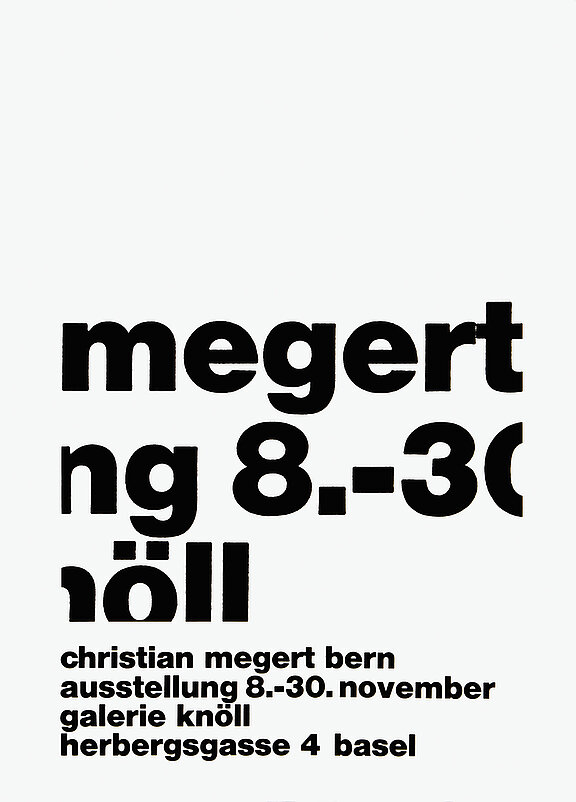
Back in Bern, his first exhibitions met with cautious, sometimes patronising critical responses. At the time, the city’s official art scene was shaped largely by the Kunsthalle Bern, whose reputation rested on early twentieth-century Swiss modernism. In contrast, Galerie 33 — founded in 1953 by Marcel Wyss and Dieter Roth — offered a more open and experimental platform. Christian Megert became closely involved with the gallery and simultaneously sought contact in Paris with the circle around Galerie Iris Clert and the artist Yves Klein.
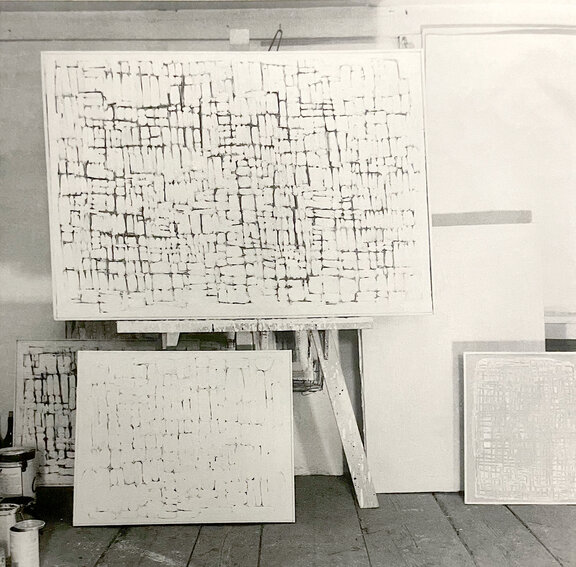
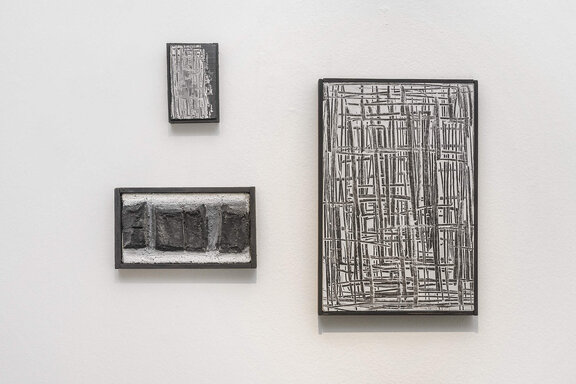
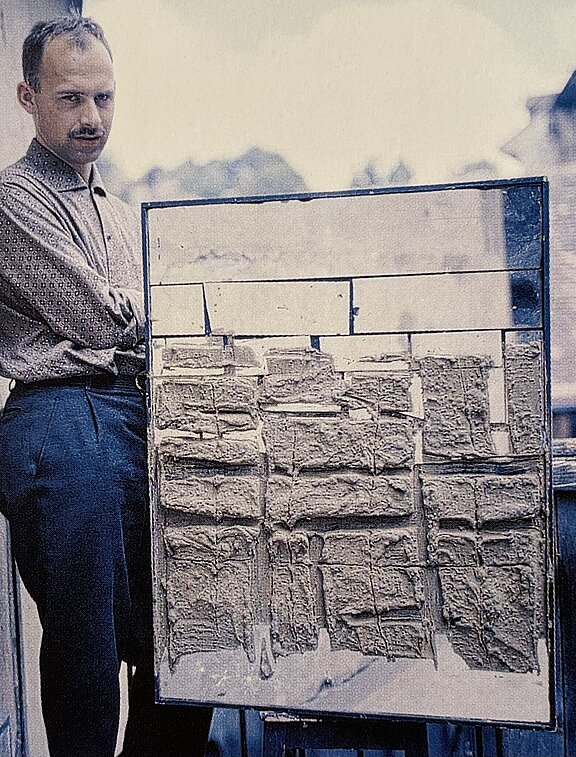
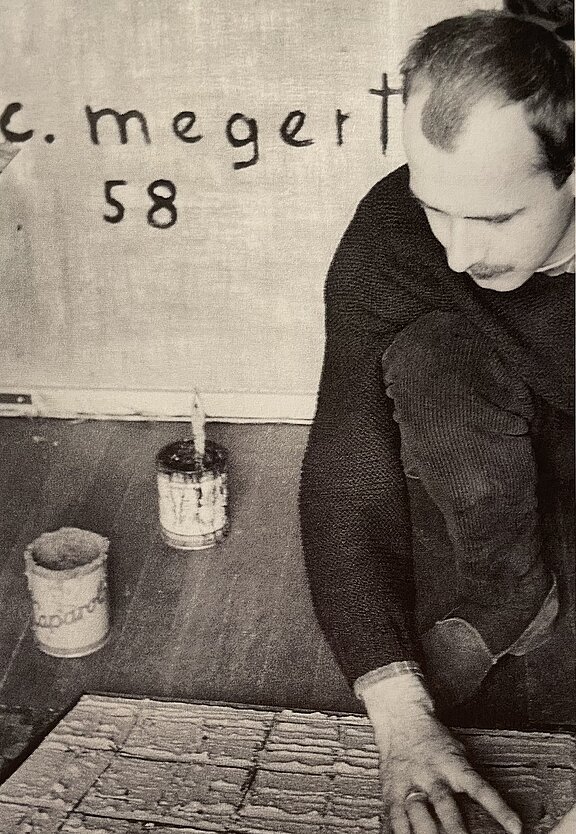
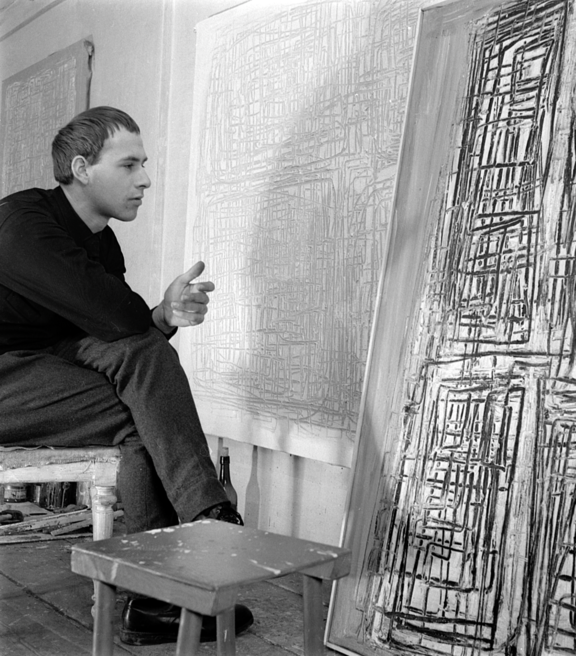
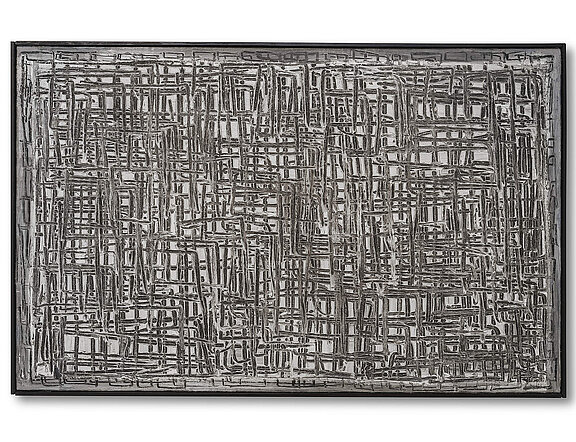
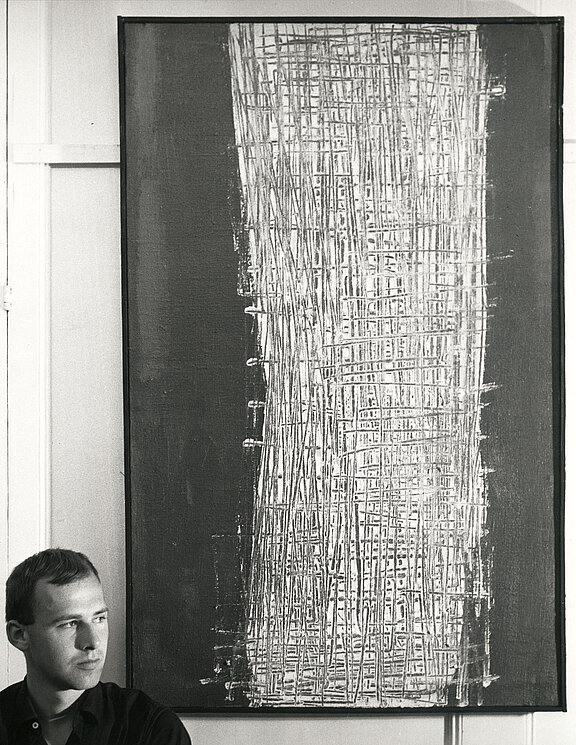
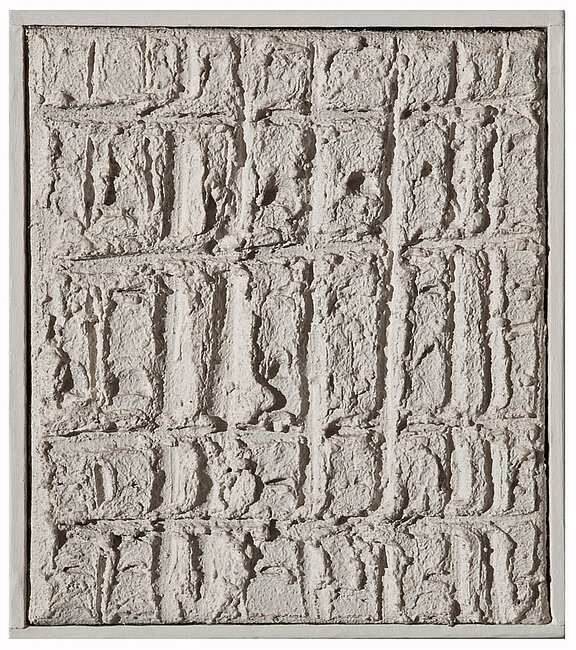
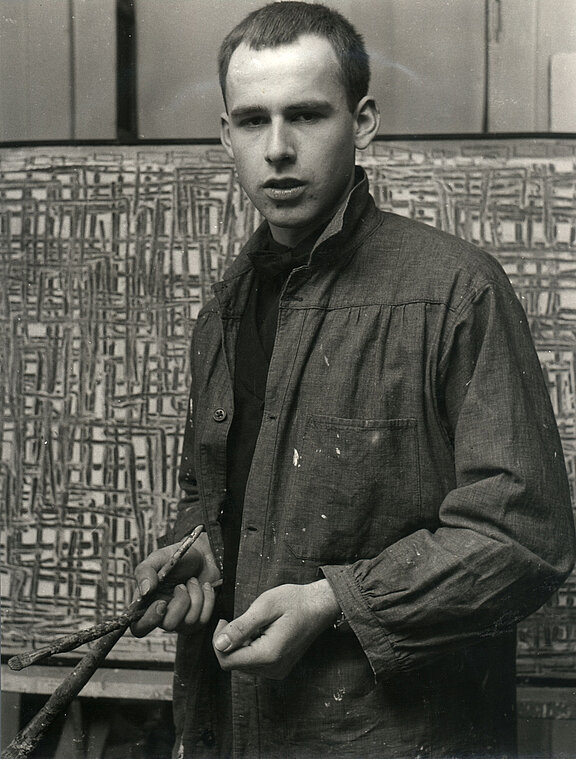
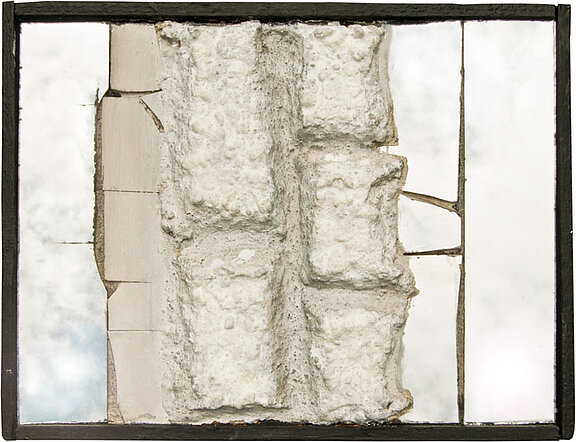
Megert took an increasingly clear stand against the conservative conception of painting and his work underwent a rapid transformation. By 1956, his landscapes had been reduced to white, relief-like structures. Representational references dissolved into accumulations of rectangular forms. These works, which he described as "city maps", pointed toward a conception of space as an ordered yet open system. This attitude can be interpreted as an early indication of the concerns that would later find their decisive articulation in his mirror works.
With his artistically experimental approach, he wanted to steer clear of all traditional notions of art and do something different. By the age of twenty-two, Christian Megert therefore had already arrived at a form of expression whose radical consistency placed him among the most advanced artistic positions of the late 1950s.
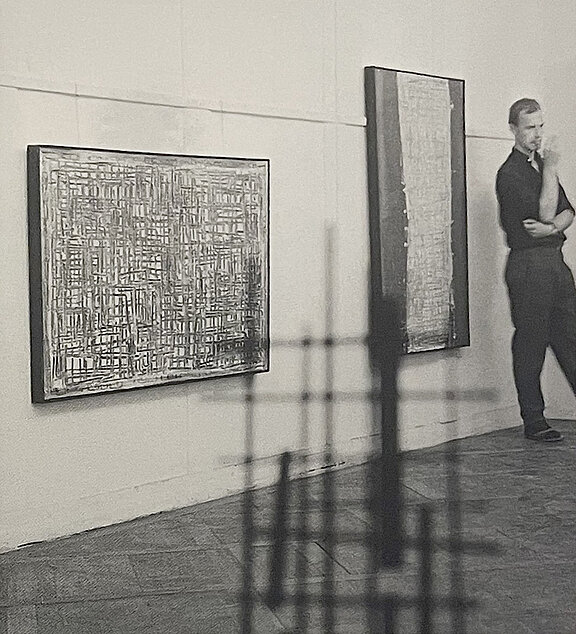
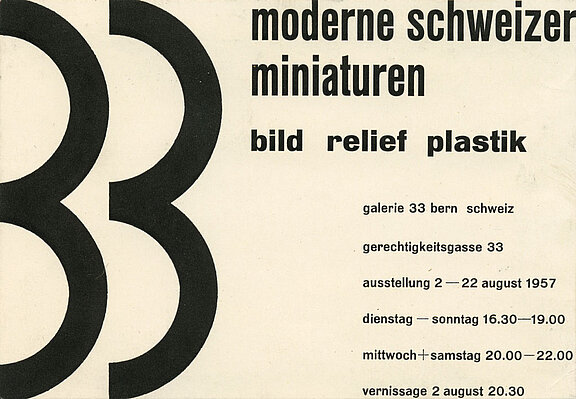
In Bern, however, there was little space or audience for this kind of art. The exhibition at Galerie 33 in 1957, presented without an opening because the works were considered nonconformist. The show effectively marked both the high point and the conclusion of his early years in Bern. In the summer of 1957, Megert turned his attention abroad and left Switzerland.
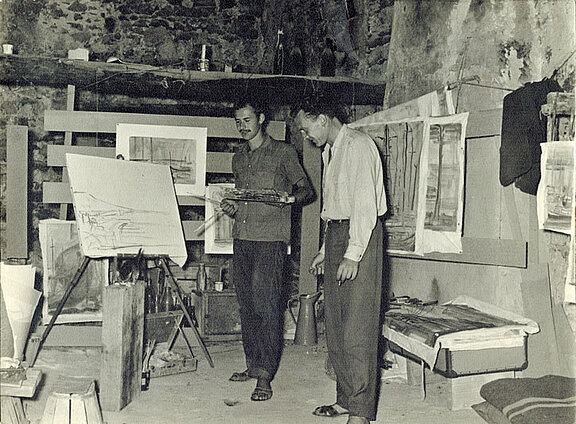
Due to early independence from his childhood home and weekend trips to Paris the artist’s later described "search for art" intensified. In the summer of 1955 in St. Paul-de-Vence (France), amid the Mediterranean light and the atmosphere of postwar artistic experimentation, he painted traditional motif-based views — harbors, sailing ships, and cityscapes — yet already with a heightened attention to color relations and structural order. These paintings still adhere to representationalism, yet they reveal Megert’s early interest in clean lines and spatial composition.
Back in Bern, his first exhibitions met with cautious, sometimes patronising critical responses. At the time, the city’s official art scene was shaped largely by the Kunsthalle Bern, whose reputation rested on early twentieth-century Swiss modernism. In contrast, Galerie 33 — founded in 1953 by Marcel Wyss and Dieter Roth — offered a more open and experimental platform. Christian Megert became closely involved with the gallery and simultaneously sought contact in Paris with the circle around Galerie Iris Clert and the artist Yves Klein.
Megert took an increasingly clear stand against the conservative conception of painting and his work underwent a rapid transformation. By 1956, his landscapes had been reduced to white, relief-like structures. Representational references dissolved into accumulations of rectangular forms. These works, which he described as "city maps", pointed toward a conception of space as an ordered yet open system. This attitude can be interpreted as an early indication of the concerns that would later find their decisive articulation in his mirror works.
With his artistically experimental approach, he wanted to steer clear of all traditional notions of art and do something different. By the age of twenty-two, Christian Megert therefore had already arrived at a form of expression whose radical consistency placed him among the most advanced artistic positions of the late 1950s.
In Bern, however, there was little space or audience for this kind of art. The exhibition at Galerie 33 in 1957, presented without an opening because the works were considered nonconformist. The show effectively marked both the high point and the conclusion of his early years in Bern. In the summer of 1957, Megert turned his attention abroad and left Switzerland.
1957–1960
Stockholm, berlin, paris
The artist’s initial destination was Cuba, where he intended to support Fidel Castro’s revolution. When embarkation via Hamburg failed, he first went to Stockholm. With little money and no fixed plan, Megert was forced to secure his livelihood before continuing. After approximately six months, he moved on to Berlin. He remained there for another half year before finally settling in Paris in mid-1958 with the intention of devoting himself entirely to art. This phase was marked by an intense and at times existential search for artistic orientation. The precarious conditions of travel and subsistence did not allow for large-scale or technically elaborate works. Traveling gave him new insights. However, Paris alone had a formative influence on his artistic work.
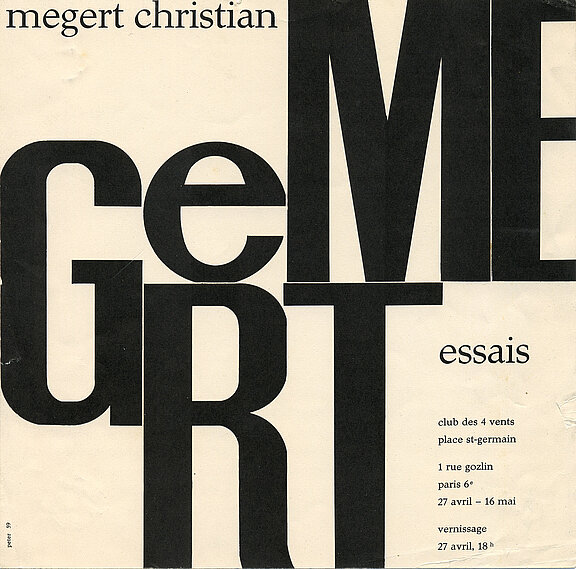
Paris in the late 1950s was a nexus of international avant-garde and experimentation. Through Daniel Spoerri, whom he had known from Bern, Christian Megert quickly gained access to studios, work opportunities, and the Parisian art scene. Informal evening gatherings at Café Raspail or La Coupole brought together artists of different generations. Megert encountered Jean Tinguely, Yves Klein, Takis, Jesús Rafael Soto and Arman. When the artist moved to Paris in June 1958, his resolve was already clear: he wanted to move away from painting. What followed was a period of concentrated experimentation with new materials, methods, and concepts.
The artist’s initial destination was Cuba, where he intended to support Fidel Castro’s revolution. When embarkation via Hamburg failed, he first went to Stockholm. With little money and no fixed plan, Megert was forced to secure his livelihood before continuing. After approximately six months, he moved on to Berlin. He remained there for another half year before finally settling in Paris in mid-1958 with the intention of devoting himself entirely to art. This phase was marked by an intense and at times existential search for artistic orientation. The precarious conditions of travel and subsistence did not allow for large-scale or technically elaborate works. Traveling gave him new insights. However, Paris alone had a formative influence on his artistic work.
Paris in the late 1950s was a nexus of international avant-garde and experimentation. Through Daniel Spoerri, whom he had known from Bern, Christian Megert quickly gained access to studios, work opportunities, and the Parisian art scene. Informal evening gatherings at Café Raspail or La Coupole brought together artists of different generations. Megert encountered Jean Tinguely, Yves Klein, Takis, Jesús Rafael Soto and Arman. When the artist moved to Paris in June 1958, his resolve was already clear: he wanted to move away from painting. What followed was a period of concentrated experimentation with new materials, methods, and concepts.
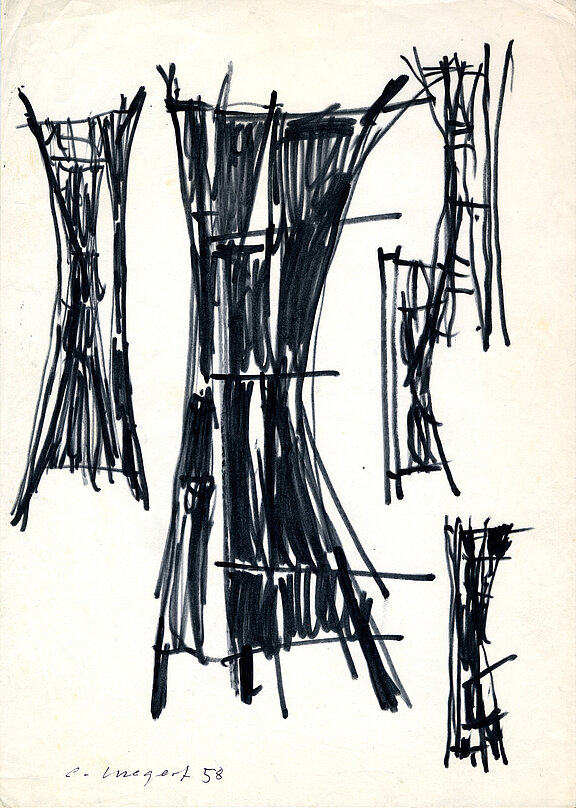
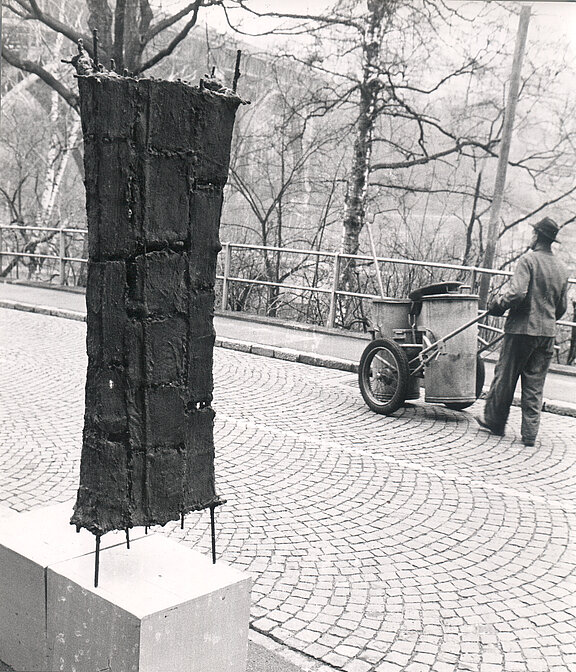
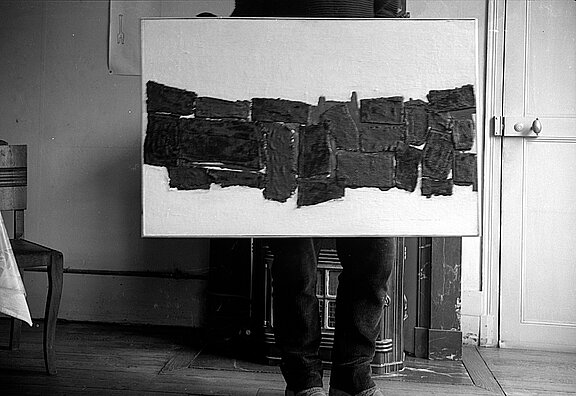
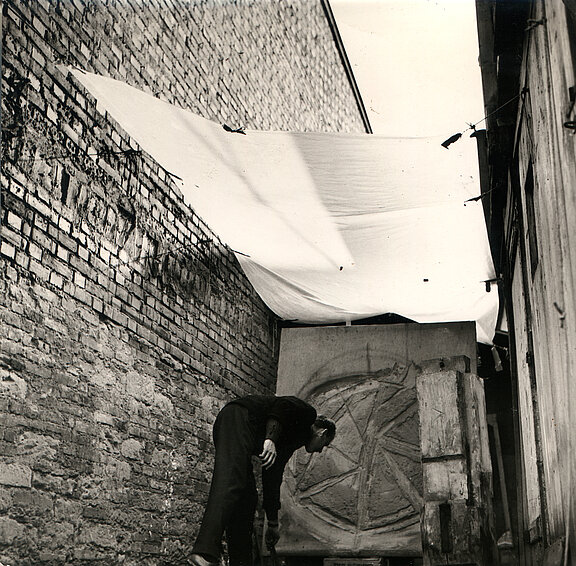
The Galerie Iris Clert played a crucial role as a platform for these developments, providing a space where nonconformist positions could be exhibited and debated. It was here that Megert encountered Heinz Mack, who would later become a co-founder of the ZERO Group.
Beyond Paris, international connections expanded rapidly. Through Piero Manzoni Christian Megert came into contact with Enrico Castellani, Agostino Bonalumi, Gianni Colombo, and the circle around Jef Verheyen. In 1958, Manzoni collected contributions for "Azimuth", a publication launched 1959 that retrospectively stands as one of the earliest documents of a new European and American avant-garde. Megert later described it as a foundational text for the emerging artistic direction. Almost simultaneously, Heinz Mack and Otto Piene pursued similar goals in Düsseldorf with the publications "ZERO 1" and "ZERO 2". Christian Megert is associated with these key movements in progressive art.
In 1959, political circumstances forced the artist to leave Paris abruptly. As a foreigner, he was affected by Charles de Gaulle’s Algerian policies, a rupture that initially caused frustration but ultimately strengthened his resolve. As a Swiss citizen without permanent employment in France, he was forced to leave the country. He was able to take only a few paintings from that period with him. This marked a first major turning point, as he lost the greater part of his early work. Encouraged by artist friends, Megert returned to Bern – still a peripheral location in terms of contemporary art, but now integrated into the emerging ZERO context.
In 1959, political circumstances forced the artist to leave Paris abruptly. As a foreigner, he was affected by Charles de Gaulle’s Algerian policies, a rupture that initially caused frustration but ultimately strengthened his resolve. As a Swiss citizen without permanent employment in France, he was forced to leave the country. He was able to take only a few paintings from that period with him. This marked a first major turning point, as he lost the greater part of his early work. Encouraged by artist friends, Megert returned to Bern – still a peripheral location in terms of contemporary art, but now integrated into the emerging ZERO context.
In 1959, political circumstances forced the artist to leave Paris abruptly. As a foreigner, he was affected by Charles de Gaulle’s Algerian policies, a rupture that initially caused frustration but ultimately strengthened his resolve. As a Swiss citizen without permanent employment in France, he was forced to leave the country. He was able to take only a few paintings from that period with him. This marked a first major turning point, as he lost the greater part of his early work. Encouraged by artist friends, Megert returned to Bern – still a peripheral location in terms of contemporary art, but now integrated into the emerging ZERO context.
1960's
New Space
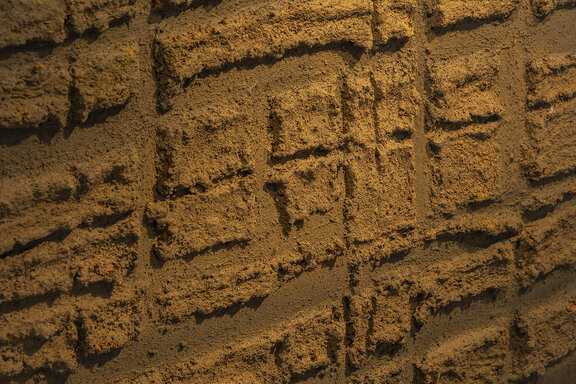
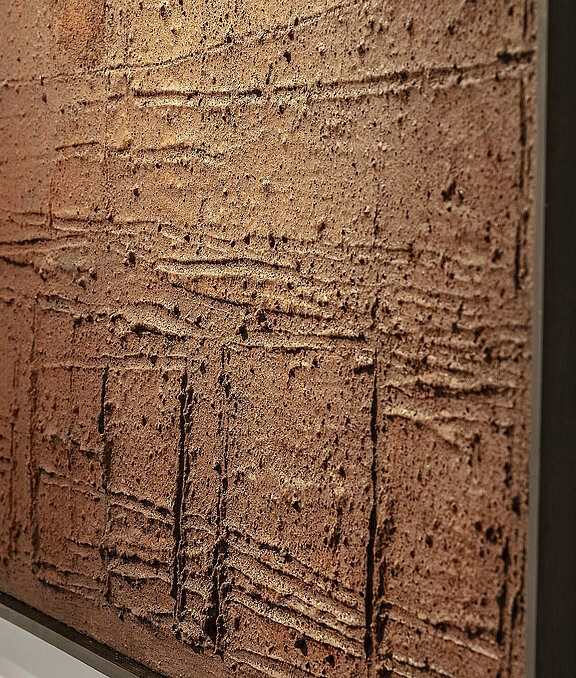
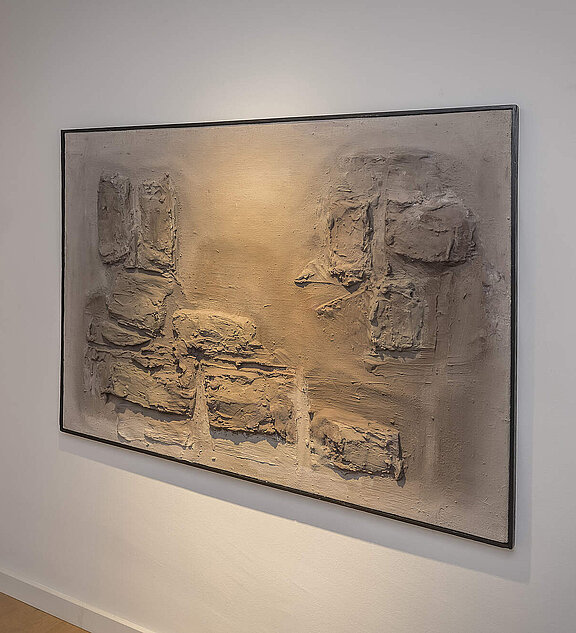
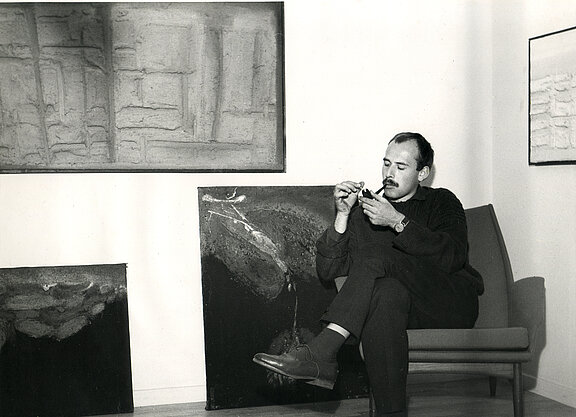
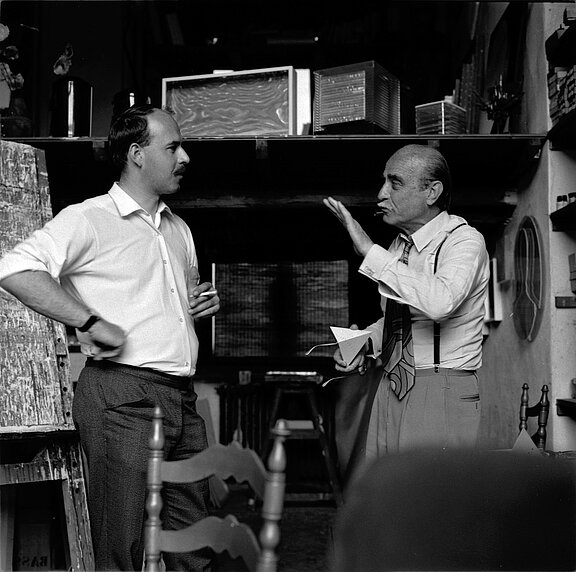
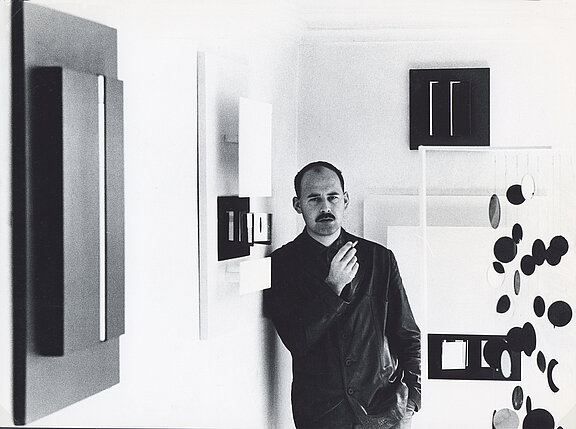
By the turn of the 1960s, Christian Megert’s work was already moving decisively toward a conception of art that would become binding for his entire oeuvre. He had turned away from painting in the classical sense and was experimenting with materials such as sand on canvas. In his so-called “textural paintings", he uses quartz sand and synthetic resin paint to create thick, textured surfaces on canvas, into which he carved lines to form abstract reliefs. His primary interest lies in expanding both the depicted and actual space of the object.
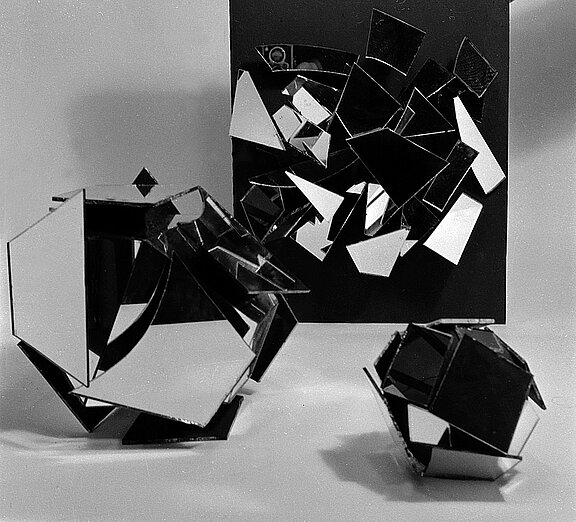
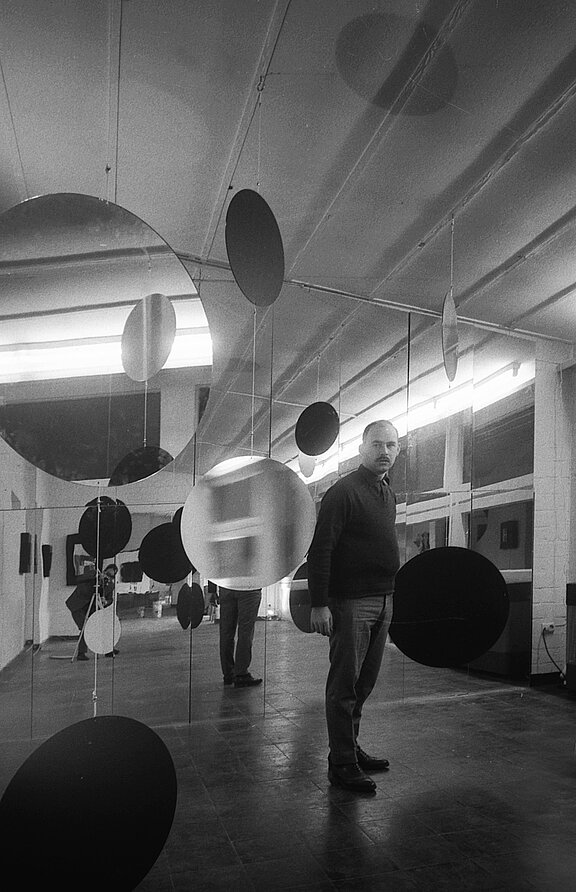
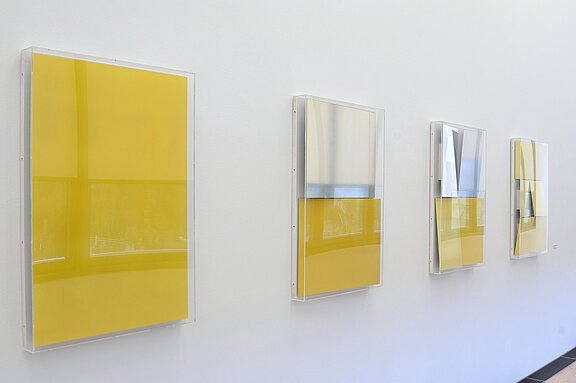
In 1960 the artist took this approach even further. He began embedding shards of mirror into the thick, textured surfaces. The incorporation of mirrors in his art allows him to engage in a profound exploration of space within the image. A mirror object, when examined closely, never reveals a fixed state. It appears only momentarily, in a constantly shifting constellation of reflections that changes with every movement of the viewer or light. Mirrors and the resulting possibilities for experiencing space became the central theme of Megert's work.
Christian Megert's artistic exploration found its precise formulation in 1961 with the manifesto of "A New Space". This text articulated his artistic credo, which remains foundational to his practice till today. He writes: "I want to create a new space, a space without beginning or end, where everything lives and is called to life, a space that is at once quiet and loud, still and in motion…" For Megert, reflection was no longer a pictorial device but a means of activating real space, integrating the viewer, and dissolving the boundaries between artwork, environment, and perception.
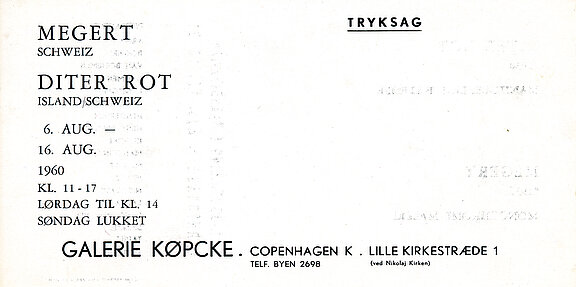
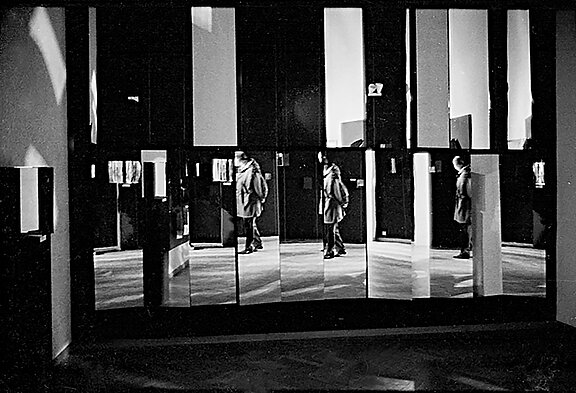
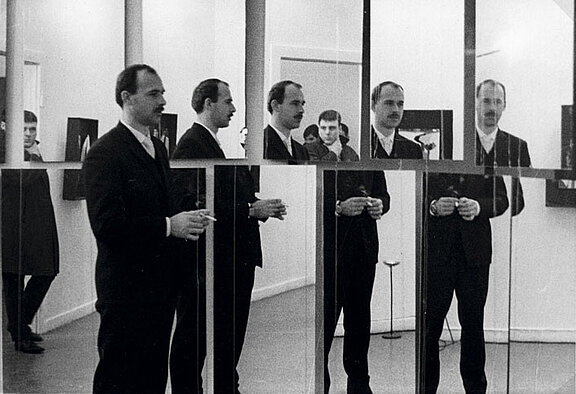
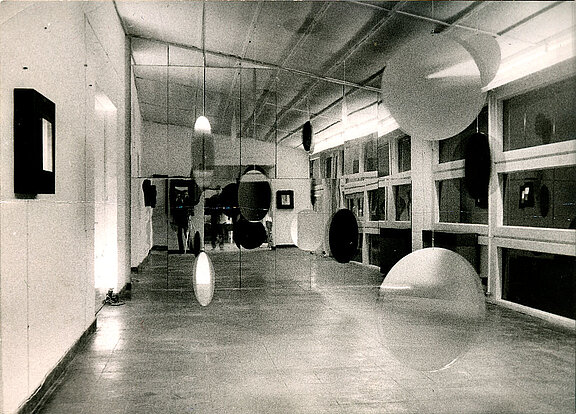
A sequence of exhibitions in 1961 illustrates the conceptual consolidation of Megert’s mirror works. His solo exhibition at Galerie Kasper, the exhibition "Nul" at the Dordrecht Museum, the major survey “Avantgarde 61” in Museum Wolfram von Eschenbach, and “A New Space” at Galerie Køpcke in Copenhagen traced this decisive phase. It was during these exhibitions that the artist developed his first mirror objects, which, in Copenhagen, evolved into the "Mirror Room", marking a clear turning point in his work: "If you hold a mirror up to another mirror, you will find a space without end or boundaries, a space of unlimited possibilities, a new metaphysical space," writes Megert in his manifesto. He puts this idea into practice at Galerie Køpcke by lining a room with mirrors.
In the years that followed, this exploration of space continued with the creation of additional mirror rooms, mirrored sculptures, kinetic fountains, and ultimately the "Zooms", which dynamically expanded perceived space. Megert founds his own artistic path. In doing so, he initially maintains close ties and an ongoing dialogue with the ZERO movement.
By the turn of the 1960s, Christian Megert’s work was already moving decisively toward a conception of art that would become binding for his entire oeuvre. He had turned away from painting in the classical sense and was experimenting with materials such as sand on canvas. In his so-called “textural paintings", he uses quartz sand and synthetic resin paint to create thick, textured surfaces on canvas, into which he carved lines to form abstract reliefs. His primary interest lies in expanding both the depicted and actual space of the object.
In 1960 the artist took this approach even further. He began embedding shards of mirror into the thick, textured surfaces. The incorporation of mirrors in his art allows him to engage in a profound exploration of space within the image. A mirror object, when examined closely, never reveals a fixed state. It appears only momentarily, in a constantly shifting constellation of reflections that changes with every movement of the viewer or light. Mirrors and the resulting possibilities for experiencing space became the central theme of Megert's work.
Christian Megert's artistic exploration found its precise formulation in 1961 with the manifesto of "A New Space". This text articulated his artistic credo, which remains foundational to his practice till today. He writes: "I want to create a new space, a space without beginning or end, where everything lives and is called to life, a space that is at once quiet and loud, still and in motion…" For Megert, reflection was no longer a pictorial device but a means of activating real space, integrating the viewer, and dissolving the boundaries between artwork, environment, and perception.
A sequence of exhibitions in 1961 illustrates the conceptual consolidation of Megert’s mirror works. His solo exhibition at Galerie Kasper, the exhibition "Nul" at the Dordrecht Museum, the major survey “Avantgarde 61” in Museum Wolfram von Eschenbach, and “A New Space” at Galerie Køpcke in Copenhagen traced this decisive phase. It was during these exhibitions that the artist developed his first mirror objects, which, in Copenhagen, evolved into the "Mirror Room", marking a clear turning point in his work: "If you hold a mirror up to another mirror, you will find a space without end or boundaries, a space of unlimited possibilities, a new metaphysical space," writes Megert in his manifesto. He puts this idea into practice at Galerie Køpcke by lining a room with mirrors.
In the years that followed, this exploration of space continued with the creation of additional mirror rooms, mirrored sculptures, kinetic fountains, and ultimately the "Zooms", which dynamically expanded perceived space. Megert founds his own artistic path. In doing so, he initially maintains close ties and an ongoing dialogue with the ZERO movement.
1960'S
AVANTGARDE NETWORK
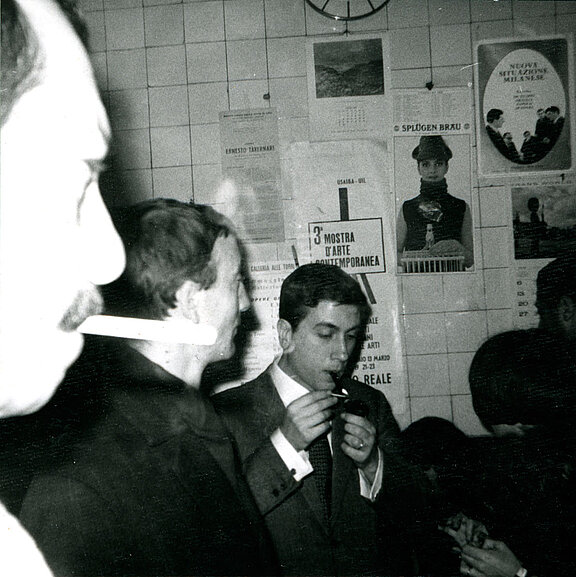
By 1961–62, ZERO activities in Germany and the Netherlands reached their peak. Artist-organised events attracted significant public attention. In Düsseldorf, Heinz Mack and Otto Piene staged a large festival in and around Galerie Schmela to mark the publication of "ZERO 3", combining electronic music, noise, crowds, and television presence. In 1962, the Stedelijk Museum in Amsterdam staged the first museum presentation of ZERO. Megert was directly involved in the planning and discussions surrounding the "Nul" exhibition.
For Christian Megert, participation in "Nul", alongside central figures such as Lucio Fontana, Piero Manzoni, Enrico Castellani, Piero Dorazio, Jef Verheyen, Heinz Mack, Otto Piene, and Günther Uecker, constituted his personal “Nul act”, through which he fully entered the ZERO circle. His access came via the international networks of Galerie Kasper, Dutch artists, and contacts in Copenhagen. The artist’s communicative manner positioned him as a suitable mediator for ZERO. Alongside Henk Peeters in the Netherlands, he became one of the movement’s most active organisers.
Megert actively promoted and shaped ZERO ideas from Bern. In the summer of 1962, he realised a long-planned ZERO exhibition at Galerie Schindler. The presentation brought together more than six hundred small works by thirty-three artists and represented one of the most comprehensive ZERO-related exhibitions in Switzerland at the time — a show that encapsulated ZERO’s aspiration toward immateriality and light. The exhibition attracted wide public attention and confirmed Bern’s growing relevance within the international avant-garde discourse.
Galleries and institutions in Germany, Scandinavia, Italy, and the United States began to contact him, and exhibition activity increased rapidly. In collaboration with Harald Szeemann, then director of the Kunsthalle Bern, Megert not only introduced ZERO and related tendencies to the institution but also helped disseminate them internationally. Even after Heinz Mack and Otto Piene declared the "official end" of ZERO, Christian Megert kept up his international networking efforts.
In 1964 he co-founded Galerie aktuell together with his first wife Lydia Megert, the architect couple Kurt and Sylvia Aellen, Peter Begert, and Rolf Weber. Initially located at Kramgasse 42 and later at Gerechtigkeitsgasse 23 in Bern, the gallery was conceived as a collectively run platform committed to the "New Tendencies". While closely connected to ZERO, its program extended beyond it, incorporating object art, kinetic art, and positions related to Concrete Art. Artists such as Yves Klein, Piero Manzoni, Lucio Fontana, Victor Vasarely, and Dieter Roth were presented as central reference points within an expanded field of post-painterly practice.
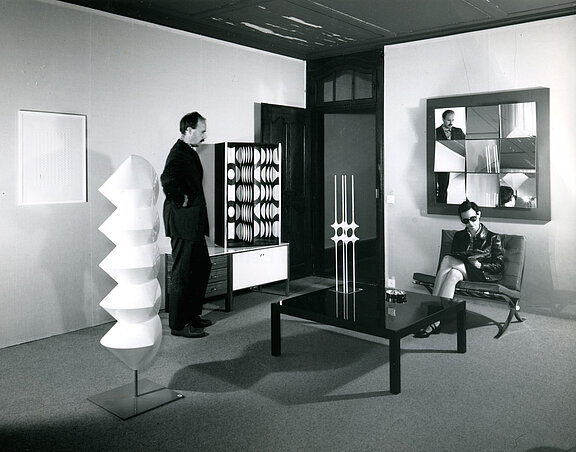
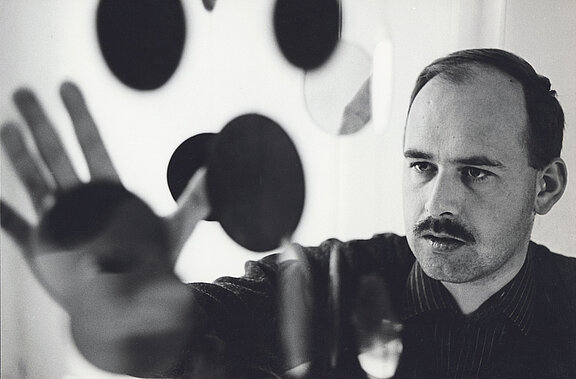
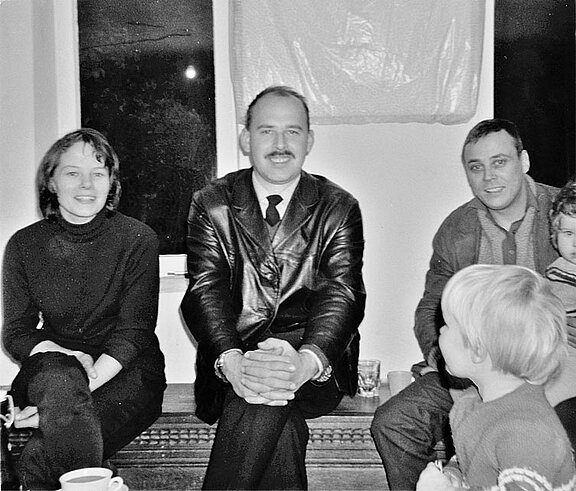
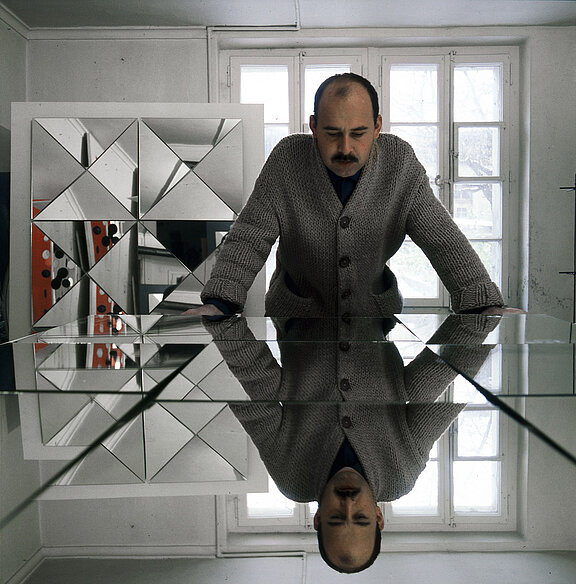
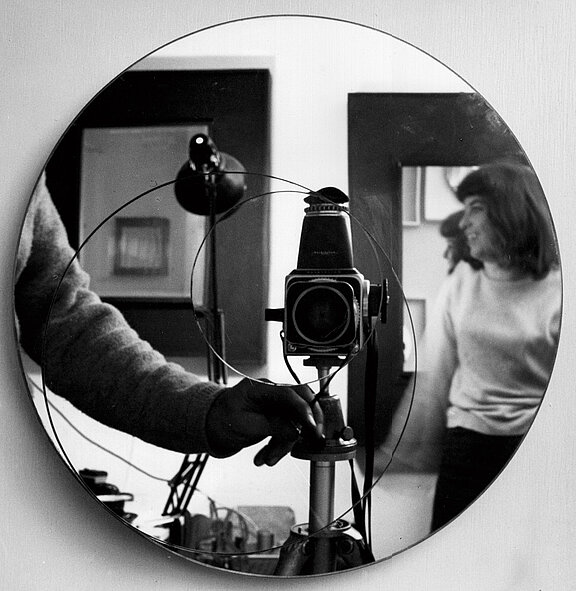
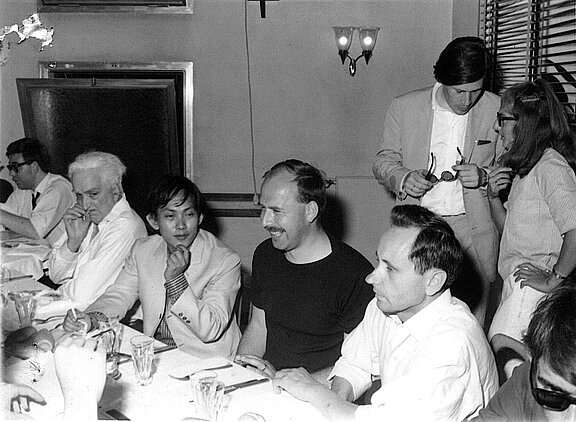
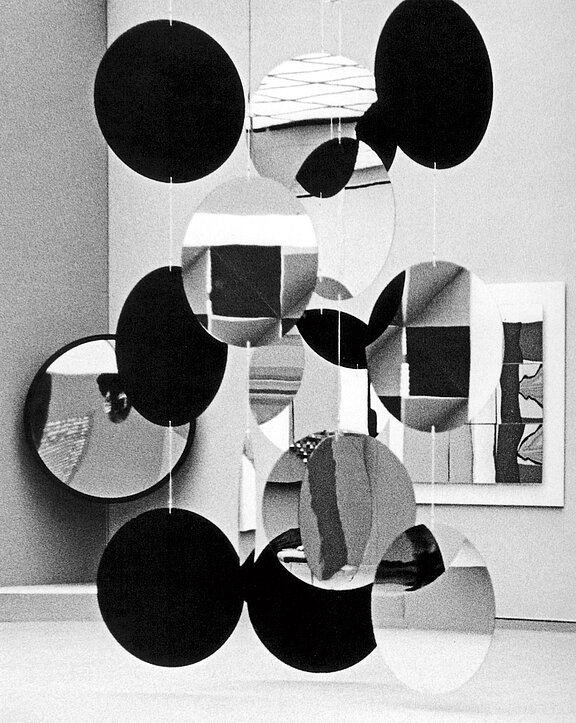
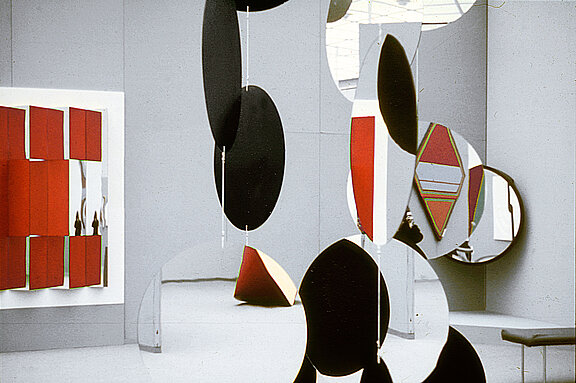
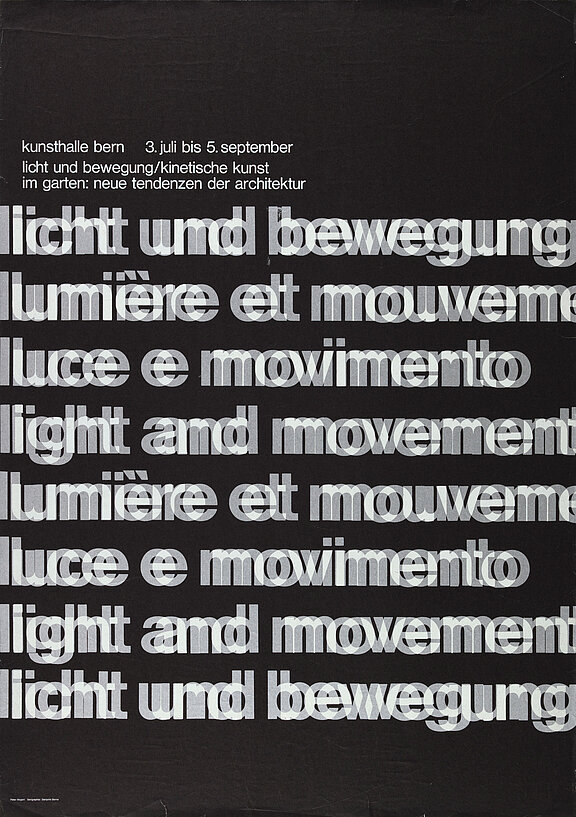
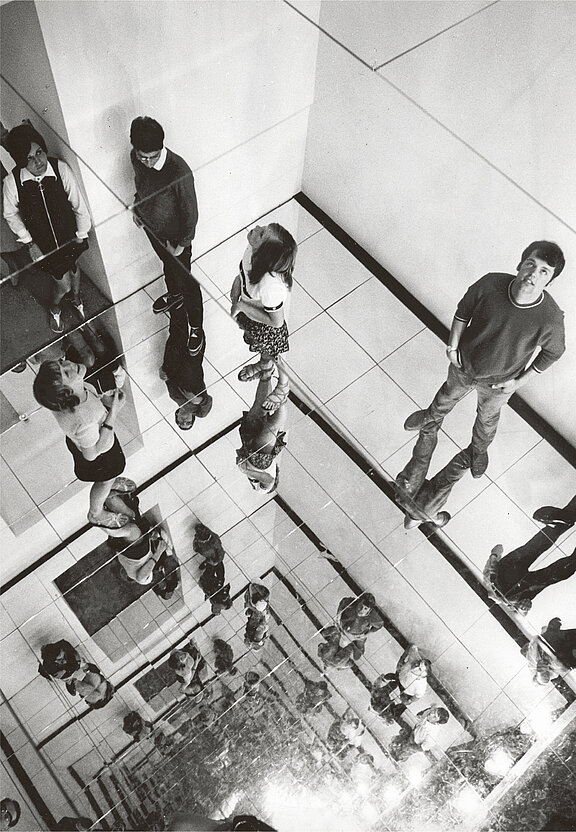
By the mid-1960s, Galerie aktuell had become an important node within the international avant-garde network. Over time, however, the growing commercial expectations began to overshadow the original experimental impulse. When it became evident that the necessary regenerative dynamic was no longer possible, the gallery closed in 1968, having fulfilled its historical role.
Parallel to these developments, Megert was involved in the loosely organised exhibition collective "Bern 66". Given his active involvement in organising exhibitions and networking with avant-garde artists, he was often perceived not only as an artist but also as an organiser and mediator. Through him, a younger generation of artists like David Bill and Etzel Klomsdorff encountered the ideas of the European neo-avant-garde at a remarkably early stage. At the 1968 exhibition "Ways and Experiments: 30 Young Swiss Artists" at the Kunsthaus Zürich, the Bern scene was recognised as one of the most vital artistic concentrations in Switzerland.
1963–68
BOXES AND KINETIC OBJECTS
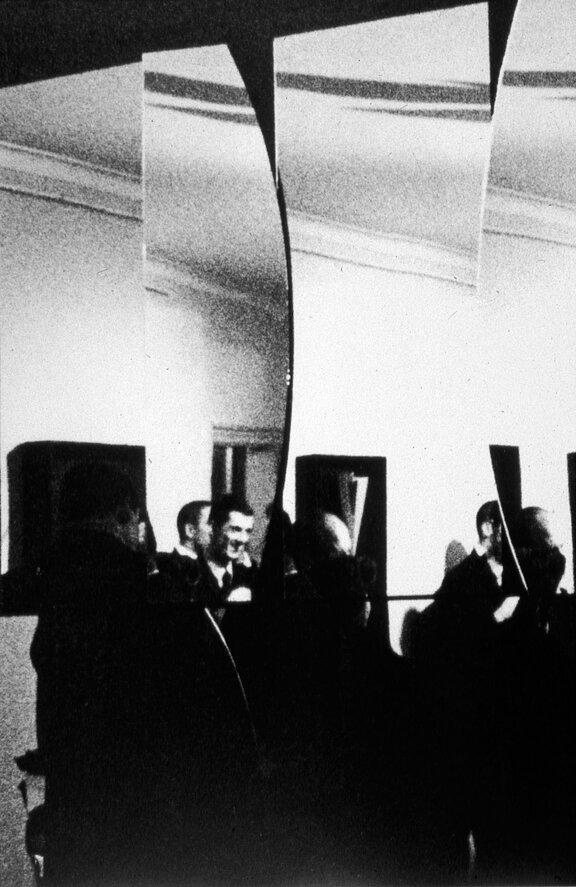
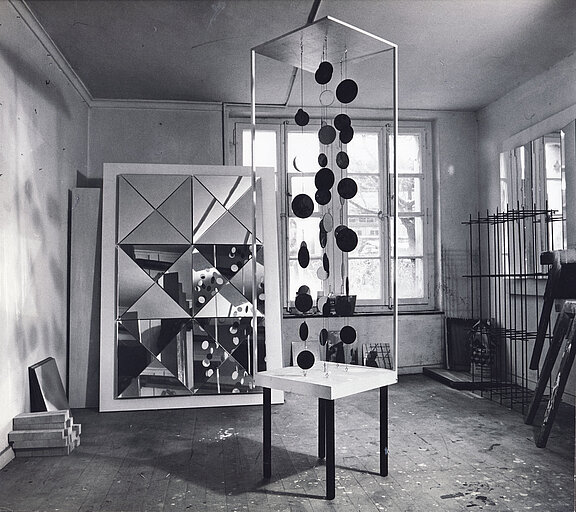
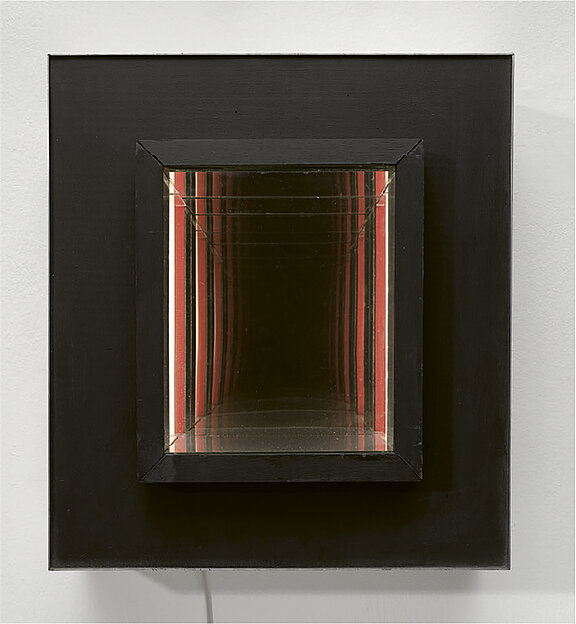
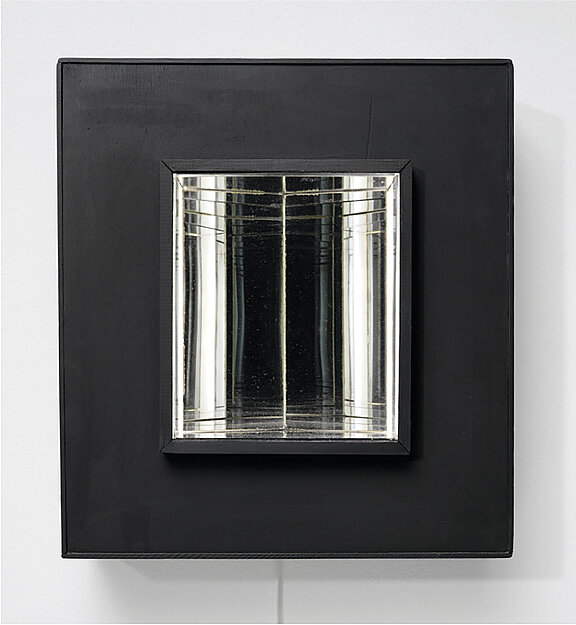
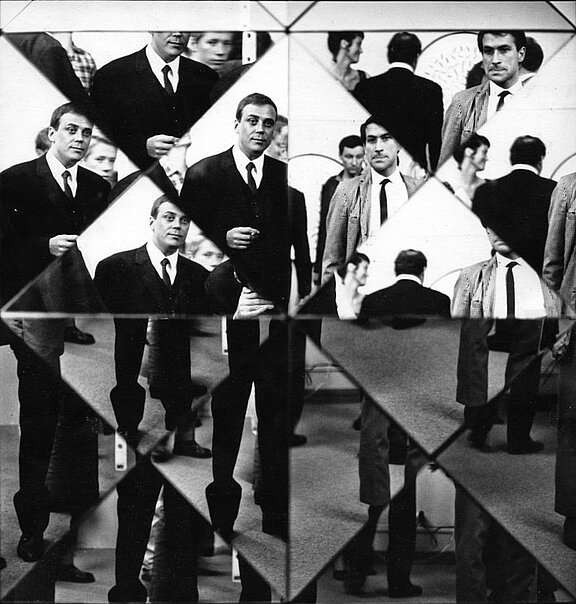
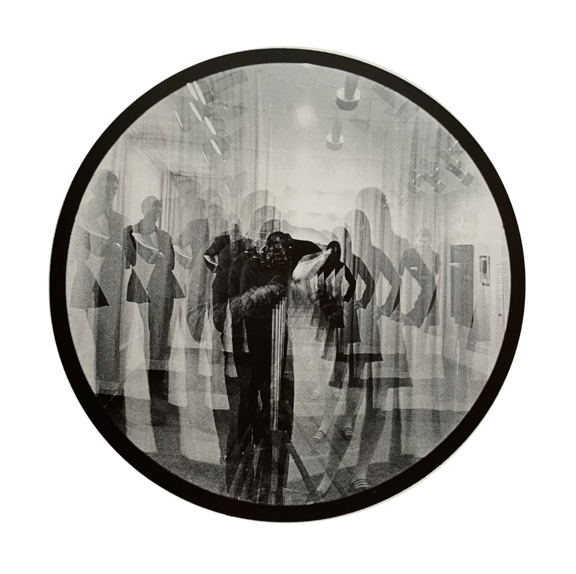
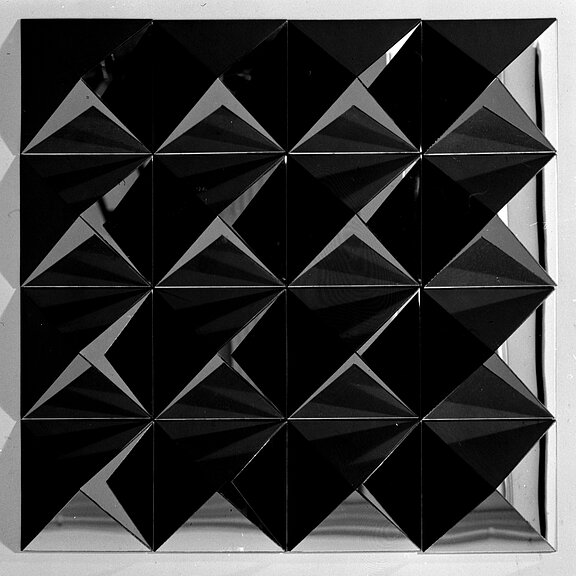
Christian Megert’s mirror objects became increasingly precise and technically sophisticated, developing from fragmentary compositions into geometrically structured surfaces. Many of his works in this time were based on the principle of collage. This is a method the artist had already explored during his vocational training through paper collages, where fragmented elements formed finely balanced dynamics. Building on the triangular structures developed for "Expo 64", from 1965 onward Megert cut and assembled mirrors according to strict geometric calculations. Large-scale mirror environments — such as those realised in Lausanne (1964), Gelsenkirchen (1965), Esslingen (1967), and ultimately at "documenta 4" in Kassel (1968) — represented the culmination of his spatial investigations through installation.
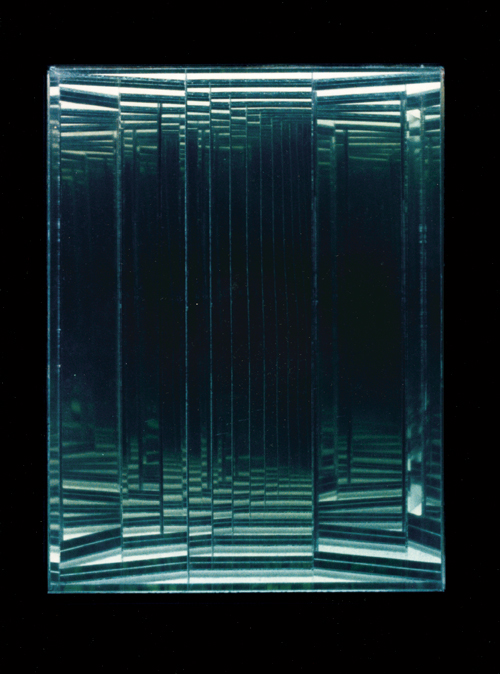
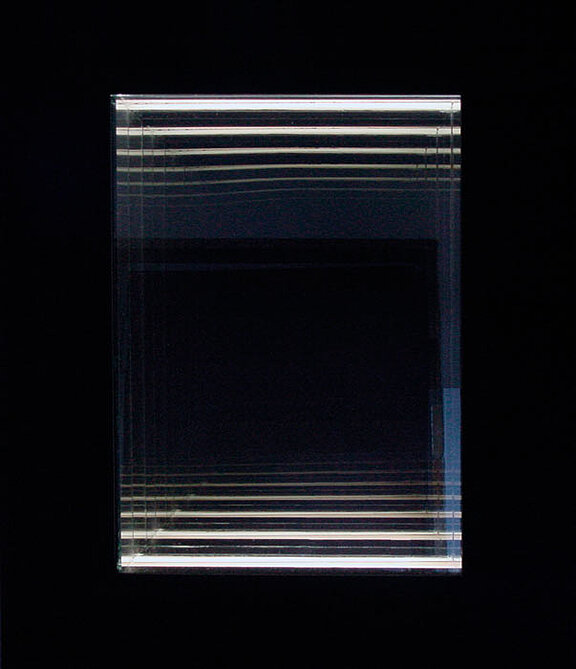
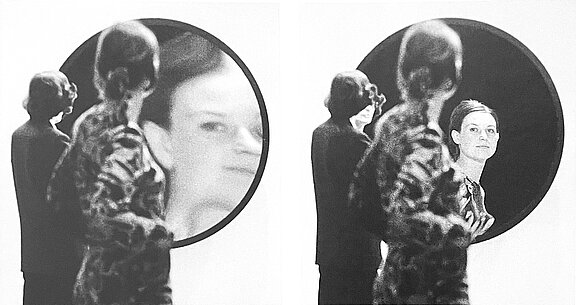
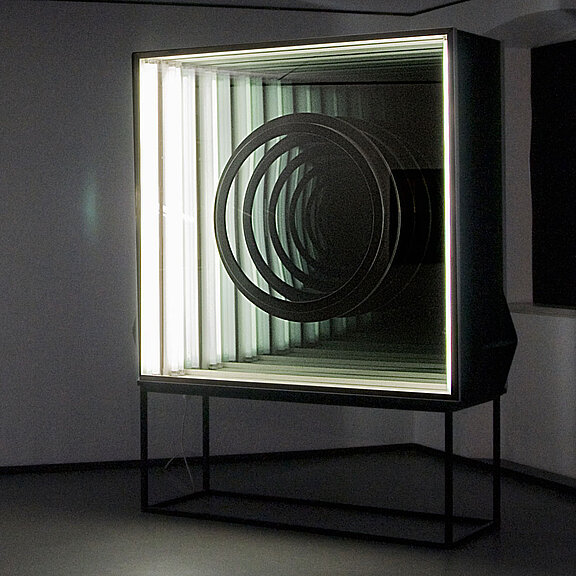
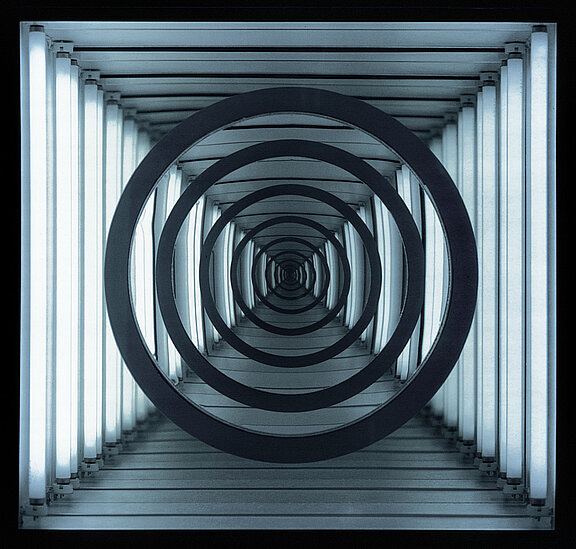
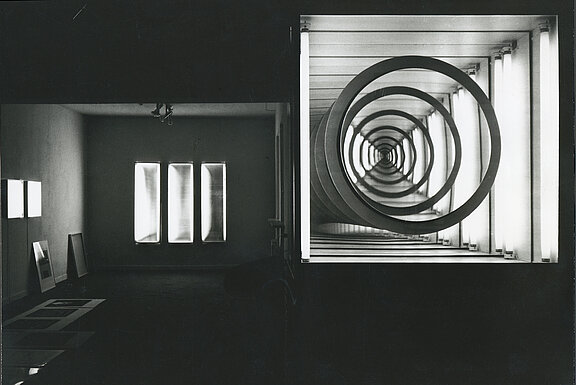
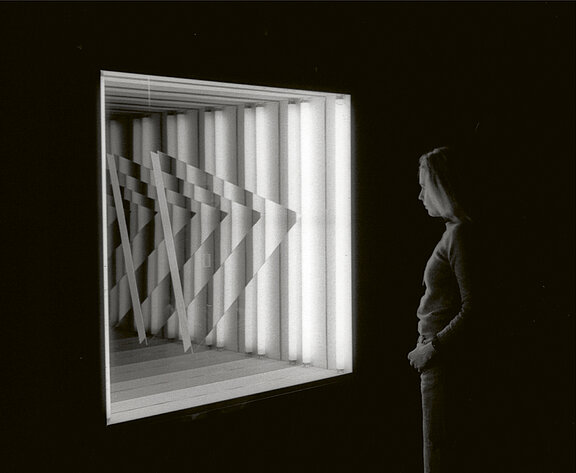
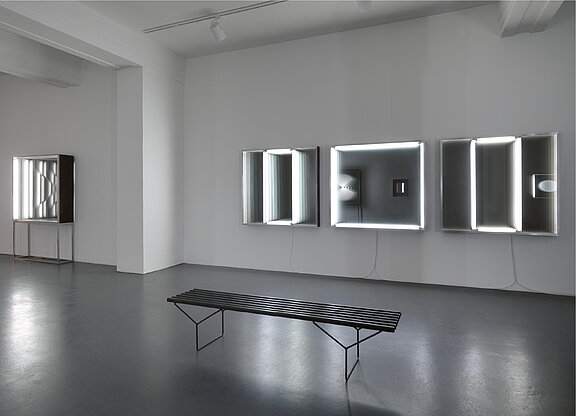
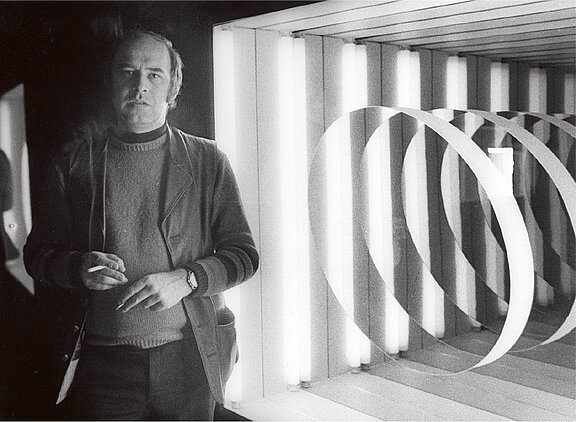
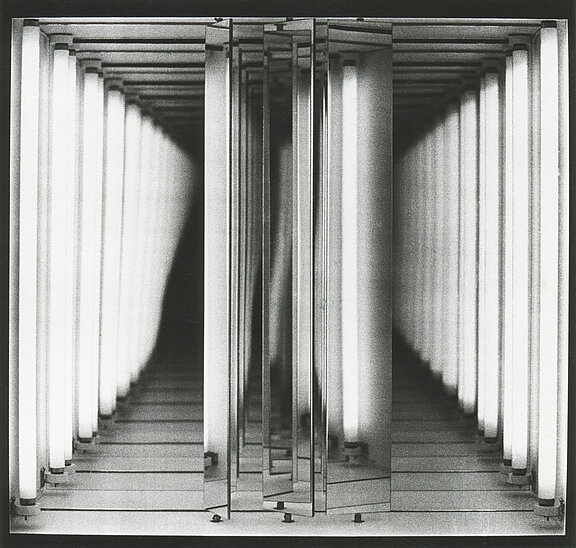
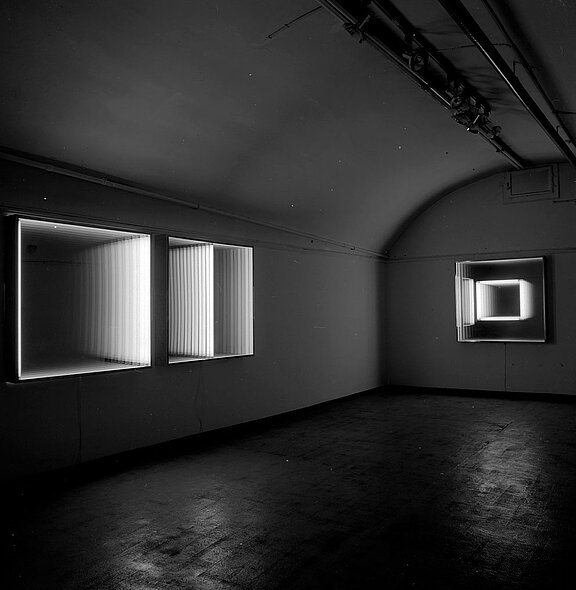
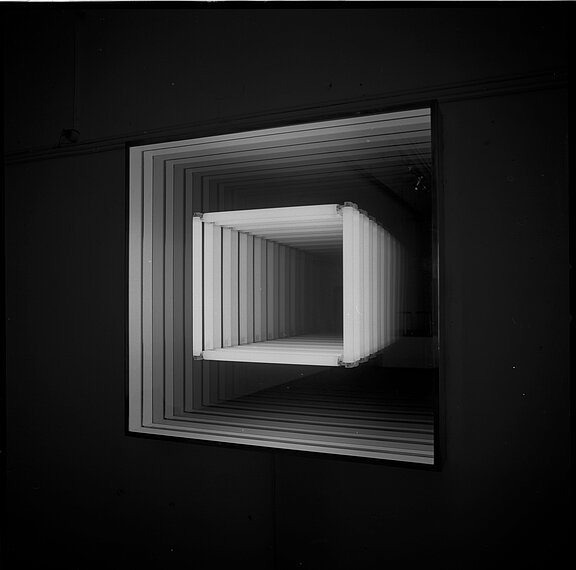
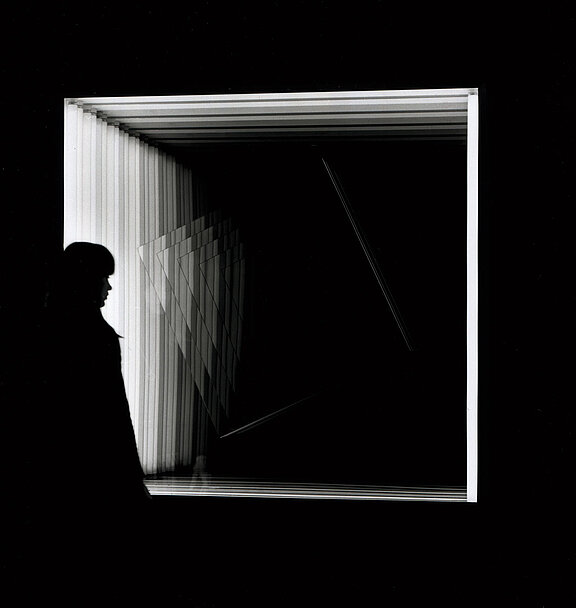
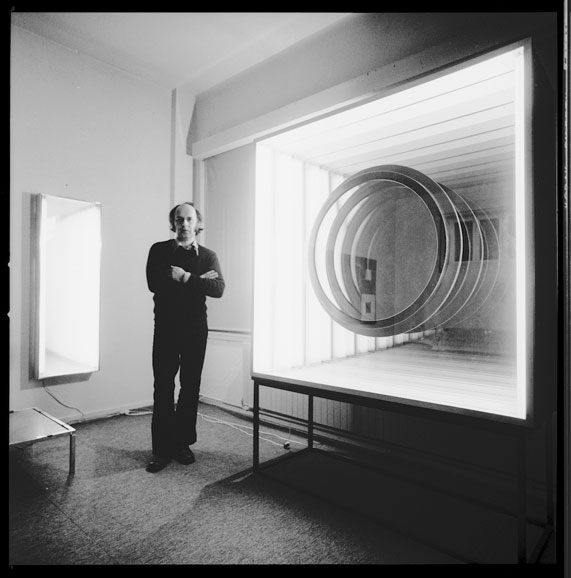
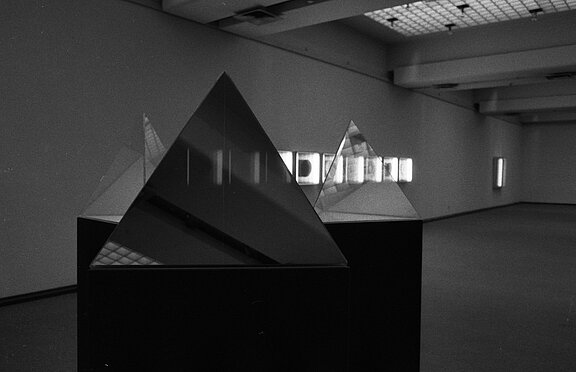
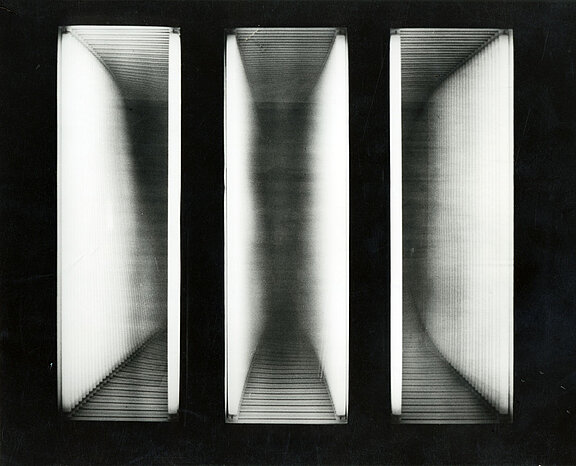
With his "light boxes" and "infinity space boxes" Christian Megert began creating light-kinetic objects starting in 1963. His mirror and glass objects relied on industrially manufactured materials, in line with earlier ZERO positions. For his boxes, technically complex objects made of wood, mirrored glass, and fluorescent tubes, the artist used new technologies like the discovery of the one-way mirror. Depending on the lighting conditions, this mirror functioned either as a reflective mirror or as a transparent window, creating an ambiguous boundary between visibility and concealment. Through this new material the artist created the impression of a new sense of depth in his work that seemed to extend into infinity. Megert experimented with additional design elements such as light in the form of neon tubes and rotating rods. Mounted in layered arrangements, and later set into motion by motors, these elements marked his decisive step from ZERO toward kinetic art.
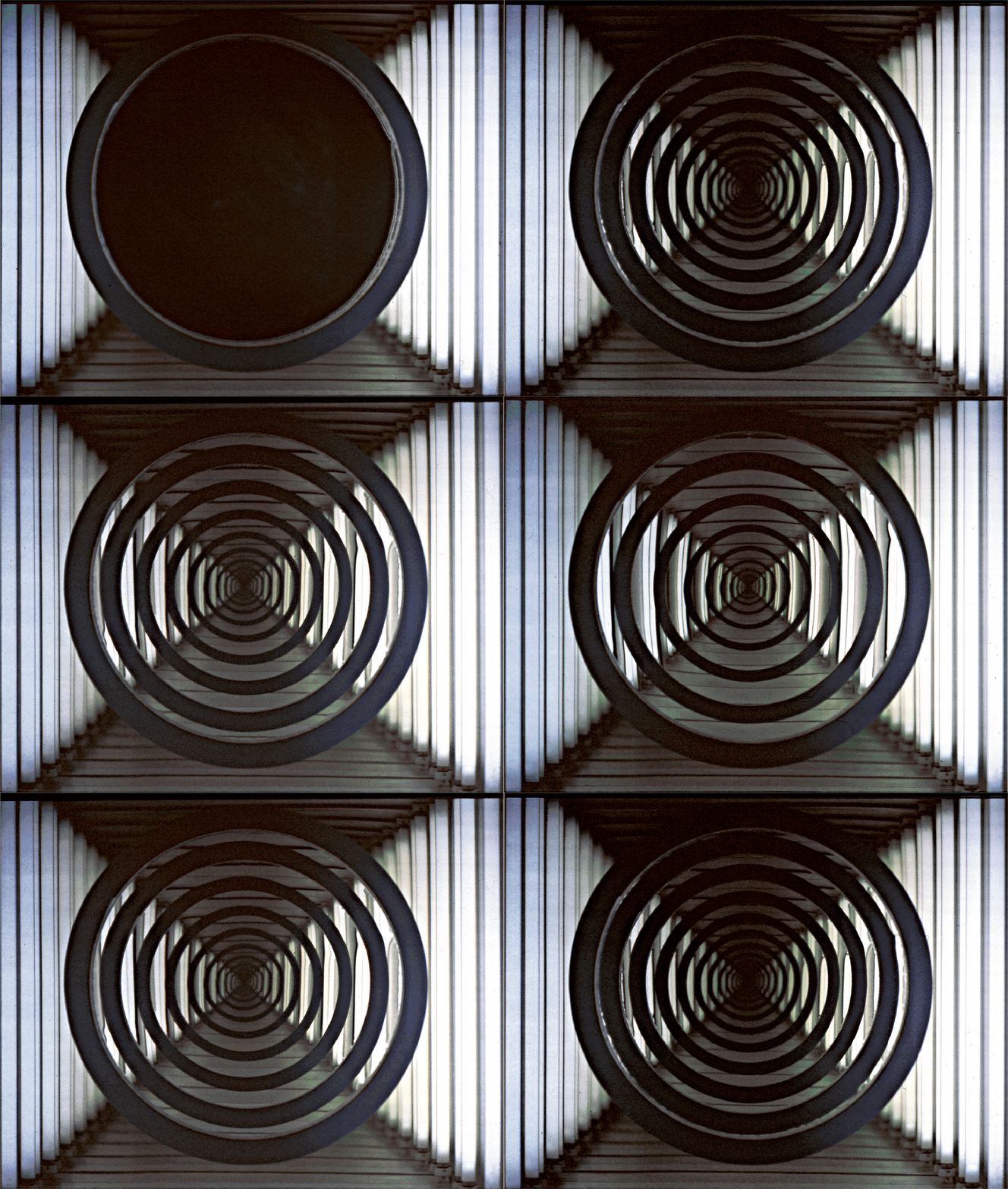
In the mid-1960s new methods of vapor deposition emerged, specifically in electroplating. This provided the first opportunity for Christian Megert to work with mirrors that are flexible in themselves. In 1969, he installed "Zooms", kinetic object for visualizing the optical movement between concave and convex in light boxes. In this way, he combined the illusion of infinite space with a continuously changing reflection. These works created a distinct hypnotic effect in the eye of the beholder. The "Zooms" are Megert’s most far-reaching light-kinetic works.
The years 1967–68 marked both the peak and the turning point of kinetic art. As institutionalisation and market forces intensified, the experimental unity of earlier years dissolved. Megert ceased work on this series of works. For him, the once-innovative potential had been exhausted by the widespread proliferation of light-kinetic art, not least in the entertainment industry.
"ZOOM"
Kinetic Lightbox
1972
"ZOOM"
Kinetic Lightbox
1972
1970'S
FRESH START IN DÜSSELDORF
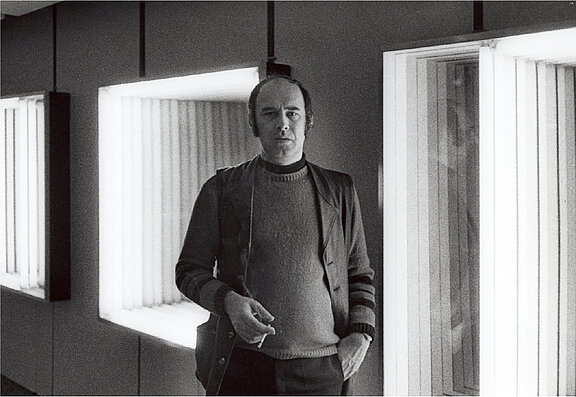
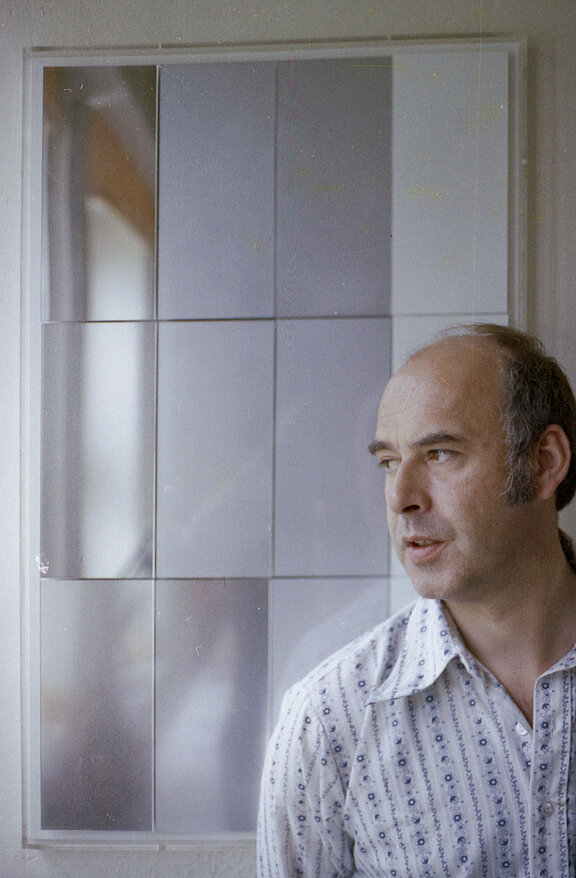
Christian Megert made a shift in his personal and professional orientation. He and his first wife separated. He later met Franziska Vogt, who would go on to become his second wife. She documented his work, thereby playing an important role in the preservation of the artist’s oeuvre. In 1973, he relocated to Düsseldorf, and in 1976 he was appointed Professor of “Integration of Fine Arts and Architecture” at the Kunstakademie Düsseldorf. The city became his second artistic home — a new starting point from which his engagement with space, light, and reflection would continue to unfold.
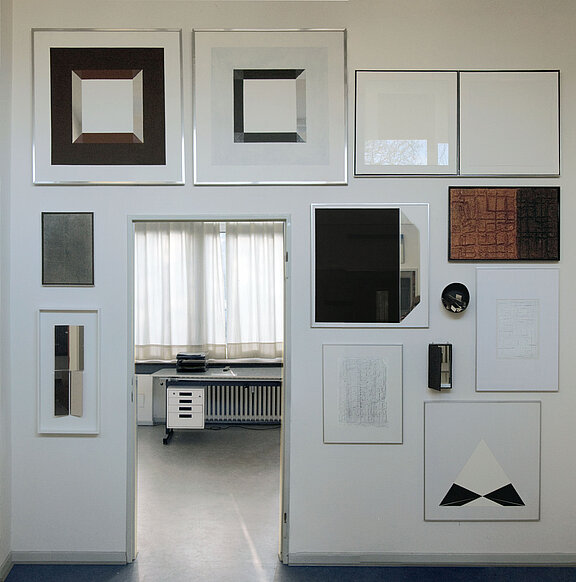
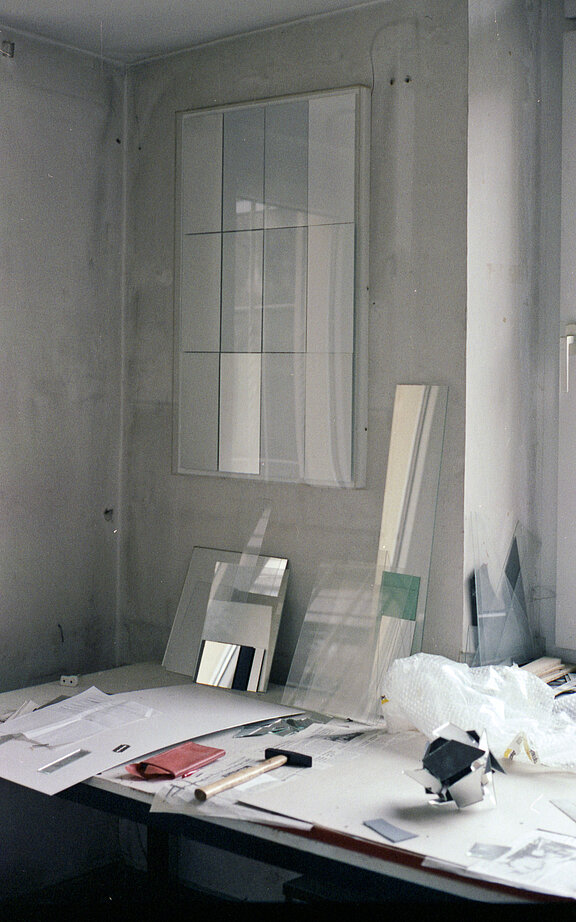
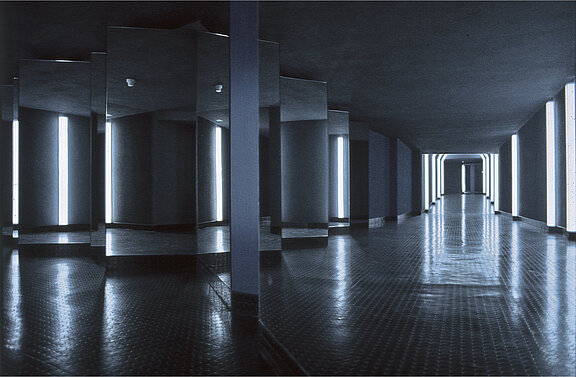
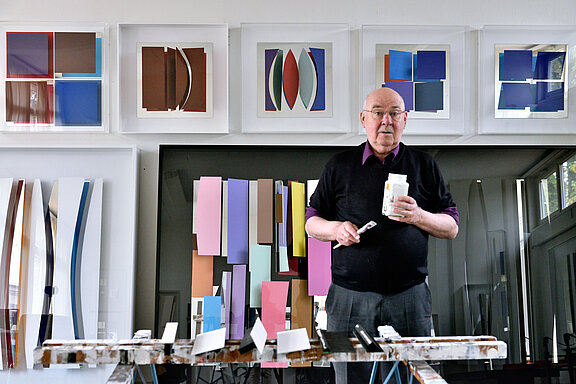
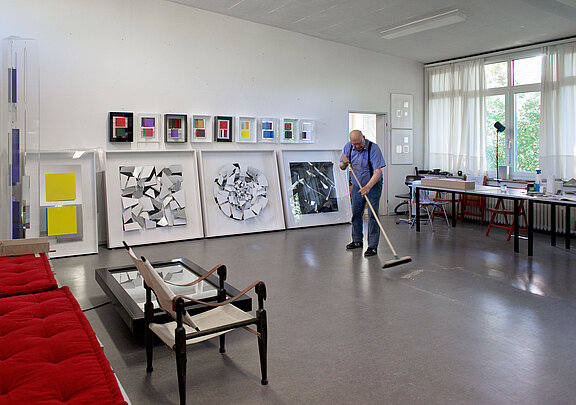
In 1973, Christian Megert established a new base for himself in the Rhineland by renting the former Nussbaumschule in Düsseldorf-Hubbelrath and converting it into his studio. The building, constructed around 1900, had previously housed the workshop of the printer Hans Möller. It served as an informal meeting place and production site for many ZERO artists: Hans Möller printed editions not only for Megert but also for Heinz Mack, Otto Piene, Günther Uecker, Yves Klein, Antonio Calderara, Gotthard Graubner and Richard Paul Lohse. Christian Megert converted the former print shop into his studio. There he was able to realise technically demanding kinetic objects, while simultaneously developing large collages that combined drawing with mirrors and glass. Experiments with colour on reflective surfaces also intensified during this period.
With his appointment in 1976 to the chair for "Integration of Fine Arts and Architecture" at the Kunstakademie Düsseldorf, teaching became an integral part of the artist’s work. The academy offered not only institutional stability but also an intellectual environment in which questions of space, perception, and material could be pursued across disciplines. Megert’s teaching reflected his artistic ethos: clarity instead of expressionism, precision instead of gesture, and an understanding of art as a process of spatial thinking rather than image production. Generations of students encountered through him an approach to art grounded in structure and openness to collaboration with architecture, engineering, and design.
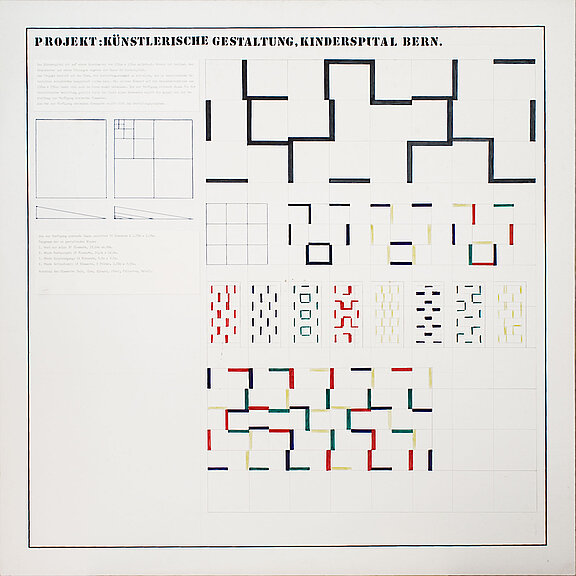
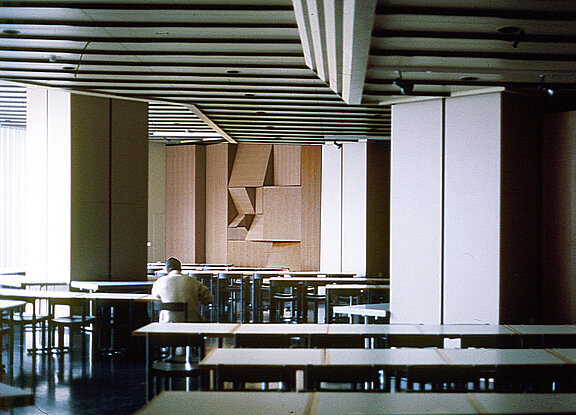
Parallel to his teaching, Christian Megert increasingly focused on works for public spaces. In 1974 and 1975, commissions followed for the artistic design of the new children's hospital in Bern and for outdoor sculptures at the Swiss Federal Sports School in Magglingen. From this point onward, work for public and architectural contexts became a defining feature of his oeuvre, requiring a shift in working methods. Studio work increasingly consisted of developing concepts, drawings, and models, followed by close collaboration with engineers, metal workshops, glass manufacturers, and stonemasons.
Alongside his artistic production and his teaching activities the artist remained active as an organiser, advisor and juror, participating in symposia, exhibitions and commissions.
1980'S
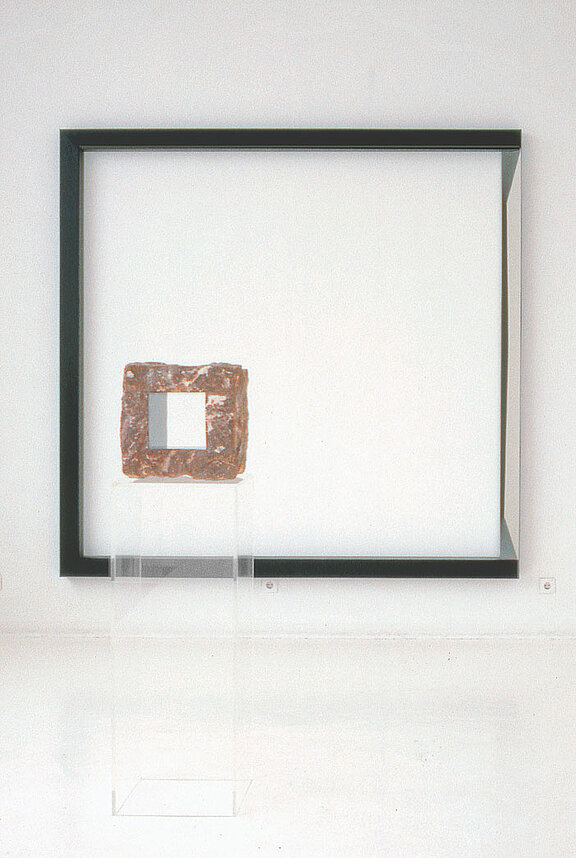
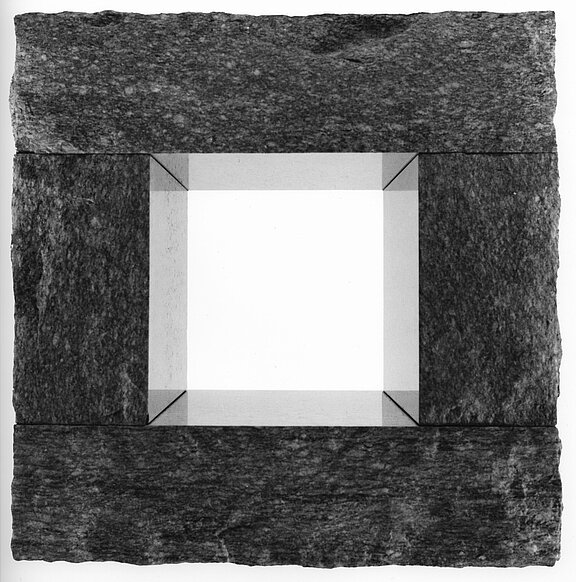
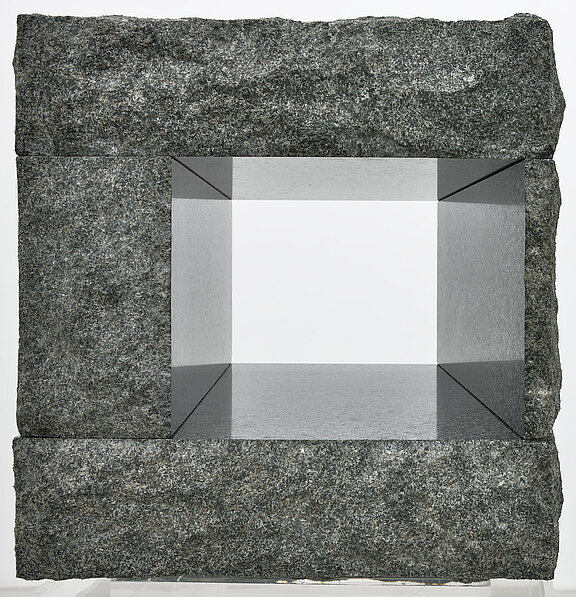
POLISHED STONE SCULPTURES
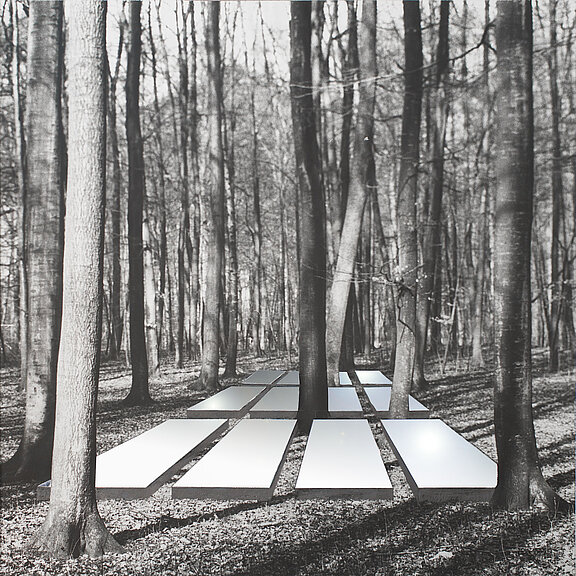
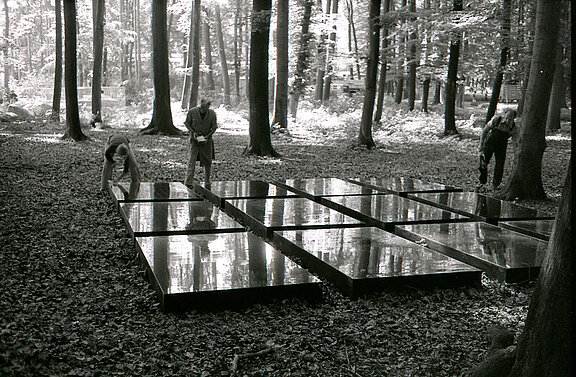
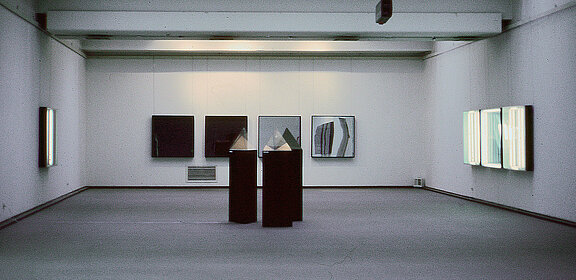
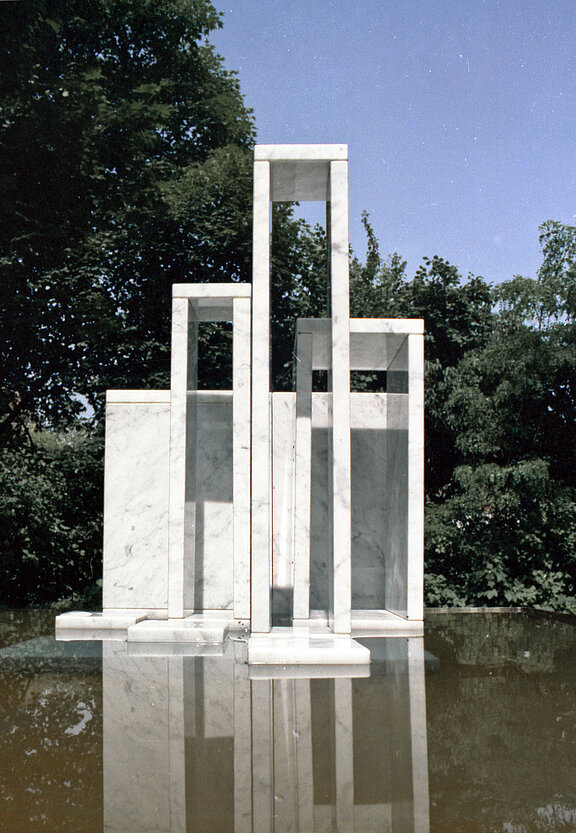
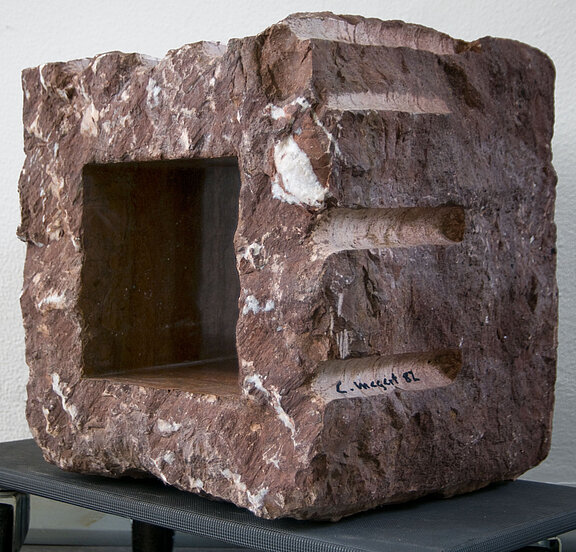
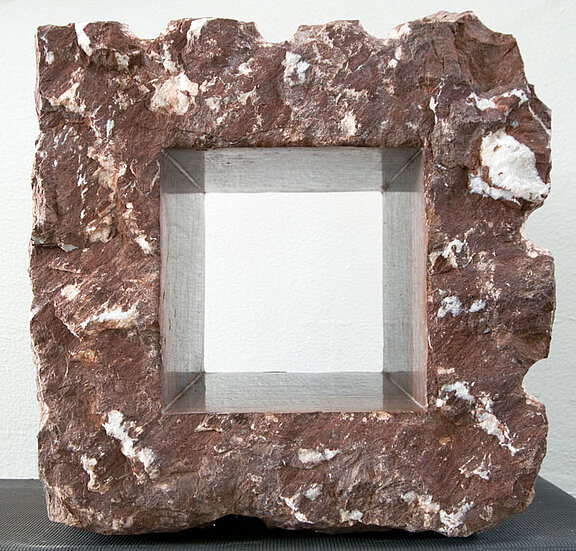
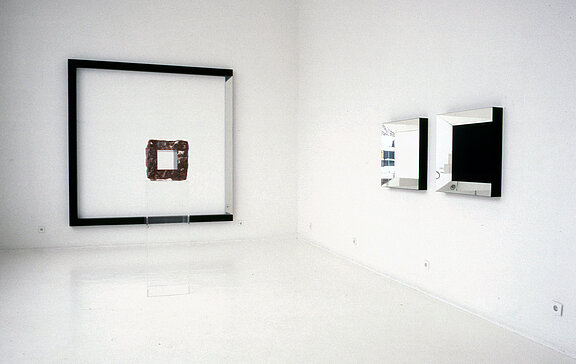
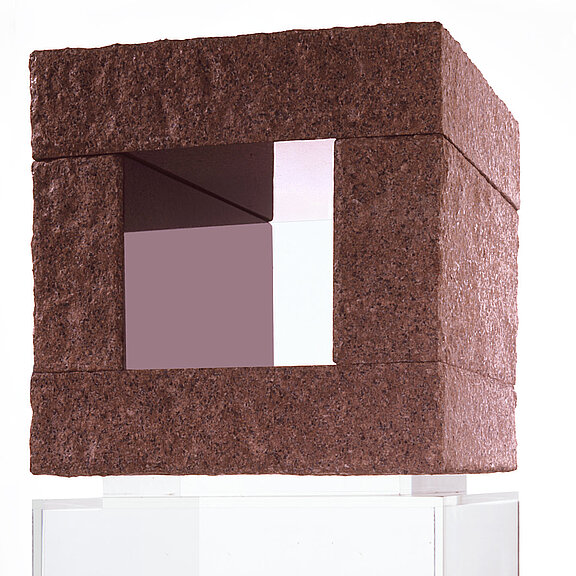
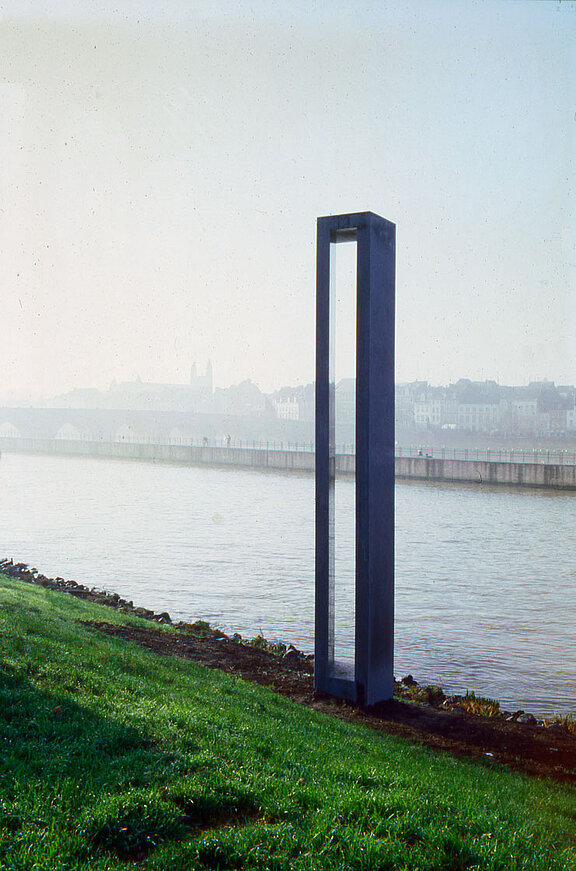
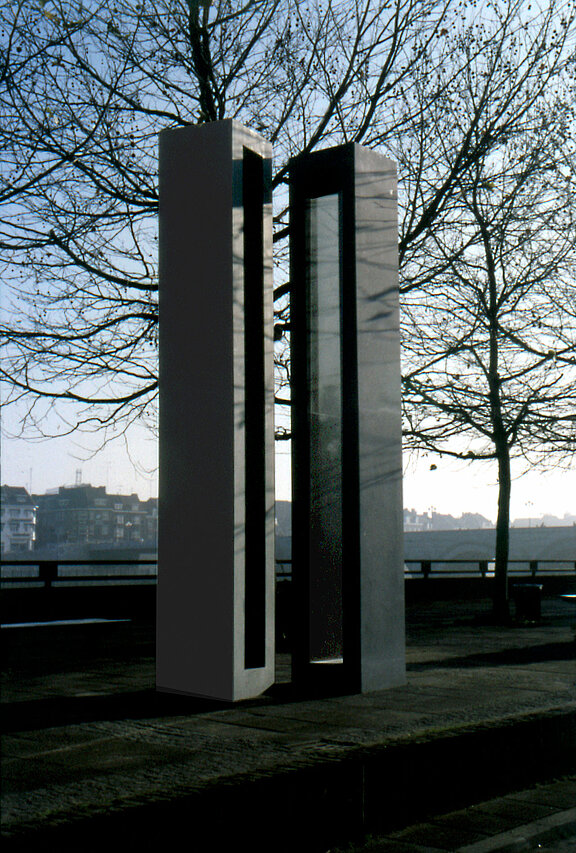
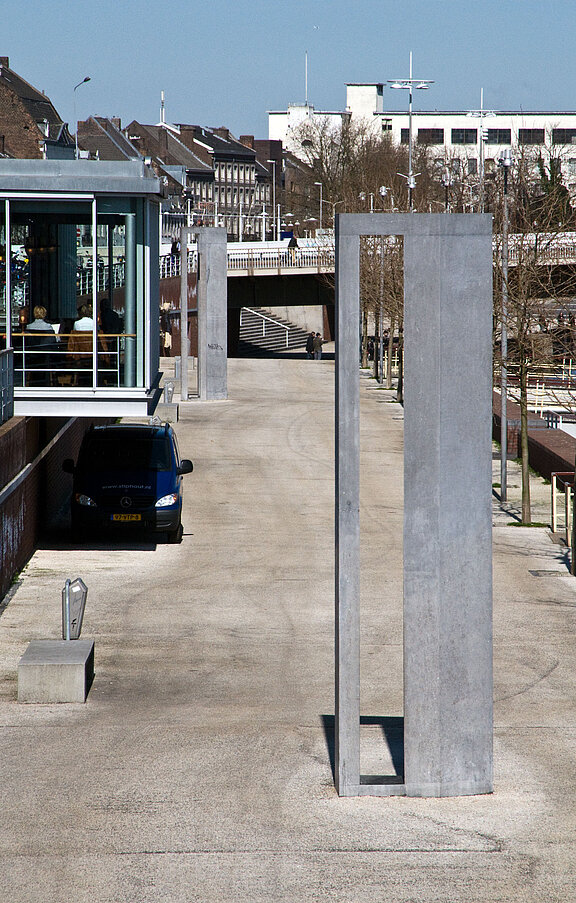
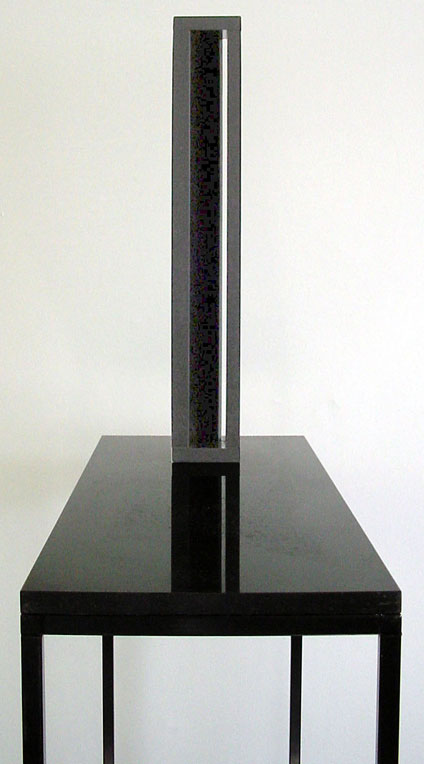
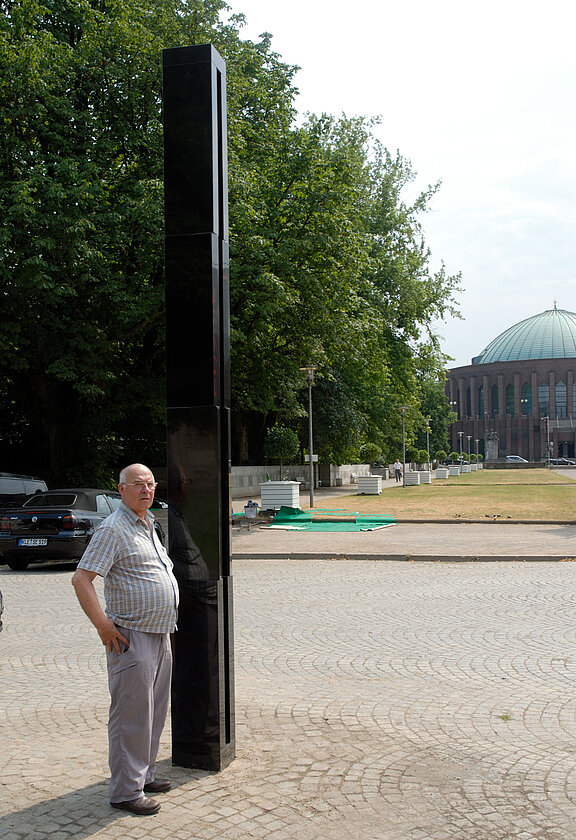
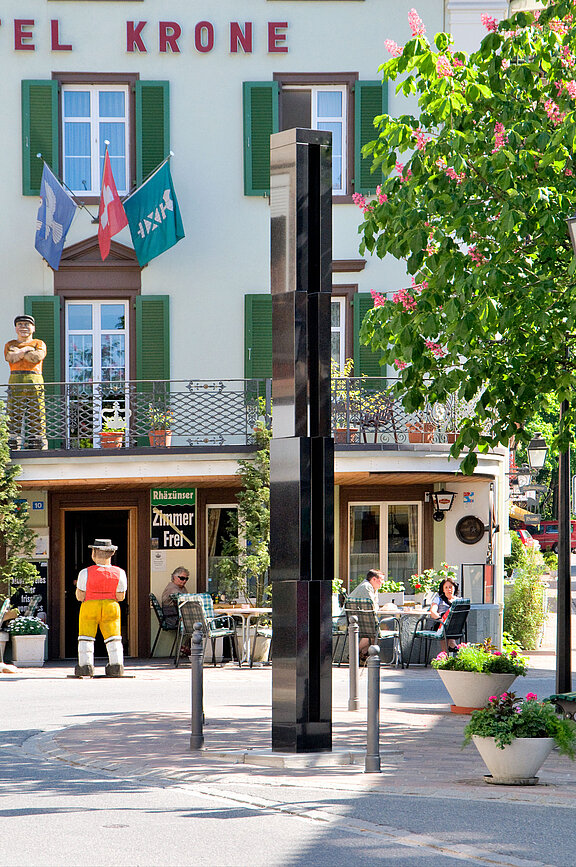
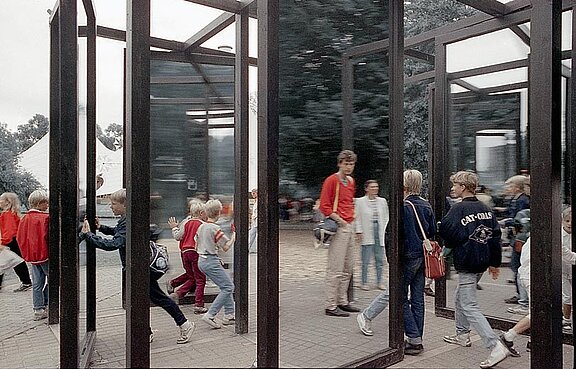
Christian Megert's design of large-scale sculptures, composed of hollow cubes arranged in a stele-like formation, is based on the principle of establishing a close, dialogic relationship with the surrounding space. In preparing the works, he engages intensively with the specific conditions of the exhibition site. The reflective surfaces, some of which are movable, further contribute to the fusion of the artwork and its surroundings.
The mirror, originally conceived as a fragile and dematerialising medium, had to prove itself as part of the artist's works under outdoor conditions. Mirrors exposed to weather, time and use over long periods, proved fragile and prone to dulling. The practical experiences gained especially with his large-scale works, led to a decisive material innovation. In the early 1980s, Megert therefore turned to stone. Certain dense types of stone could be ground and polished to a reflective surface that was more durable and could withstand outdoor conditions. This shift marked a significant expansion of his mirror concept into a new material register.
The stone mirrors retained the conceptual core of his earlier work while introducing a new sense of gravity, permanence, and material presence. What had once appeared immaterial and fleeting now acquired weight and longevity. The transition did not mark a rupture but rather an expansion: the mirror’s immaterial logic was translated into a monumental, architectural language.
1990'S
MORE COLOUR AND SPACE
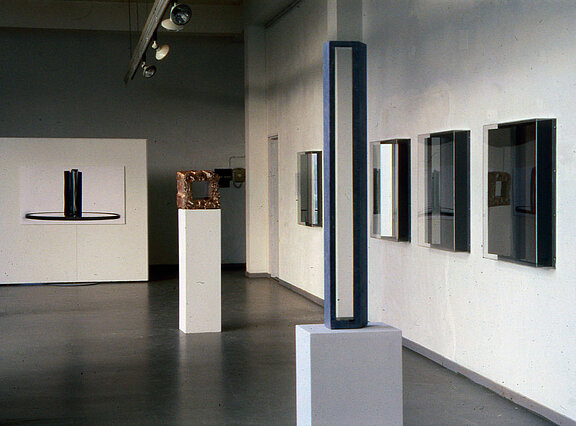
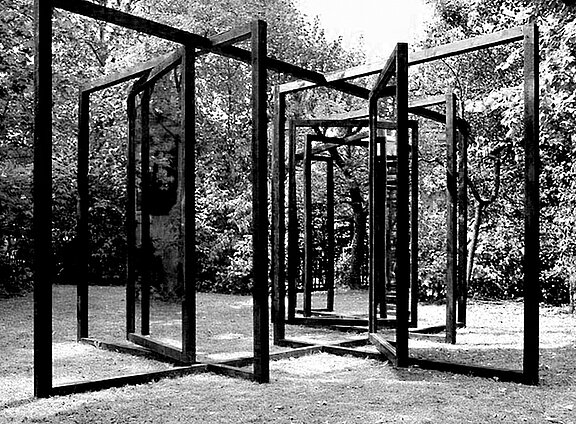
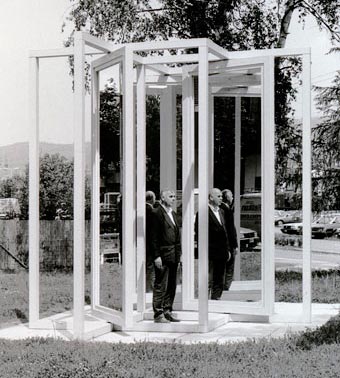
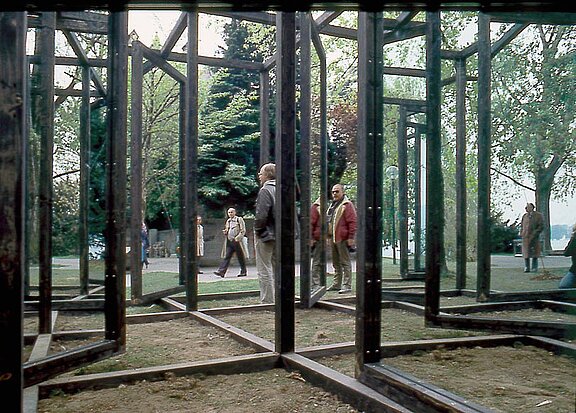
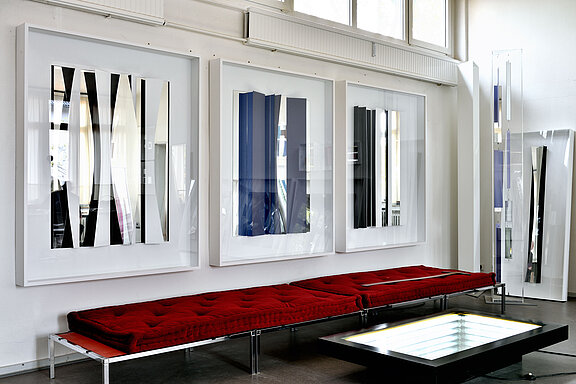
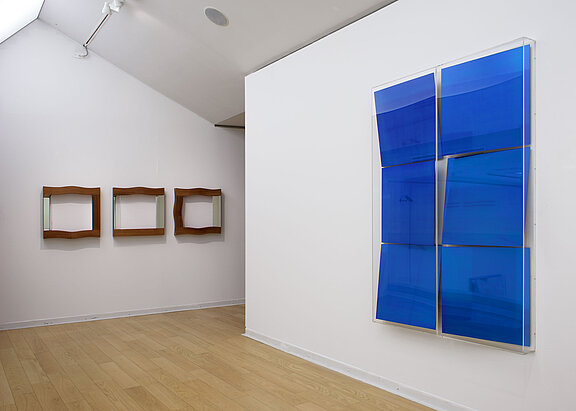
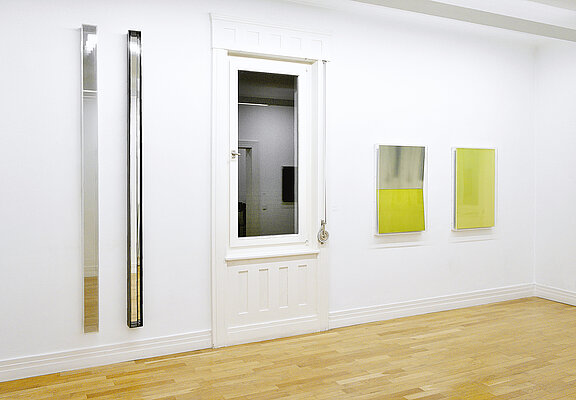
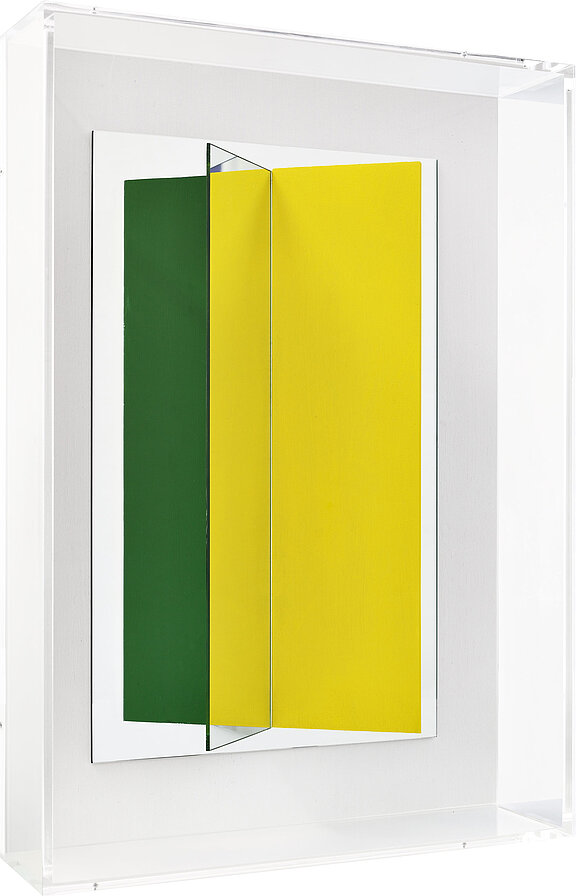
From the early 1990s onward, colour re-emerged more prominently in Megert’s work. Colour, initially suppressed in favour of black and white, returned. In doing so, he builds on works from the mid-1960s: From 1966 onward, the artist combined painted wooden surfaces with movable mirrors, notably in works produced for the Accent Gallery in Brussels. Further experimentation followed and systematic tests of colour application directly onto mirrors. In the 1990s, Christian Megert created colourful works of art — first in restrained tones, later in vivid greens, yellows, blues and reds. The choice of colours follows an intuitive approach and serves primarily as a visual reference point for perceiving the reflective surface, which doubles and intensifies the play of colours.
Public works in plazas, hospitals, schools, and landscapes increasingly defined Megert’s later creative decades. Whether in mirrored walls, stone mirror sculptures, or architecturally integrated interventions, his works continued to question how space is perceived and experienced collectively. Even on a monumental scale, the artist always conceives of reflection in relational terms. He connects the viewer's body, the environment, and movement in a constantly shifting constellation.
A CONTINUOUS LINE
Throughout his entire creative career Christian Megert’s work has been showcased in regular solo exhibitions and retrospectives: For example, in 1997 at the Kunstmuseum Bern and the Städtisches Museum Gelsenkirchen, in 2009 at the Museum für Konkrete Kunst in Ingolstadt, in 2014 at the Museum Kunstpalast in Düsseldorf, in 2015 at the Museum Ritter in Waldenbuch, and in 2017 at the Akademie-Galerie in Düsseldorf. To this day, he continues to exhibit actively.
Seen in retrospect, the artist’s oeuvre forms a continuous line from the monochrome structural paintings of the 1950s to the mirror environments of later decades. Across changing materials and contexts, his work persistently addresses the same fundamental question: how space comes into being through perception. His mirrors do not represent space, they produce it. In doing so, they make the viewer aware of their own presence within a larger, shared reality.
Despite the breadth of his field of activity, Megert’s work presents itself as a coherent whole. The principle of dialogic structure — and thus the call for viewer participation — is consistently upheld as well as his exploration of the fundamental phenomena of light, reflection, and movement. His legacy lies not only in his contribution to ZERO and kinetic art, but in his sustained redefinition of objects as spatial experience. His work stands as a quiet but rigorous counterpoint to expressive individualism. It is his art of precision and reflection that continues to resonate far beyond its historical origins.
Dr. Anja Grossmann
Dr. Anja Grossmann
Dr. Anja Grossmann