FOREWORD
Franziska Megert (born 1950, in Thun) is a Swiss photographer and video artist. Her artistic practice is characterised by an ongoing exploration of paradoxical human relationships in new media, as well as the interplay between photography and video in relation to art history. She has been working primarily with video since the 1980s and is considered the pioneers of Swiss video art.
In her photographic series, video installations, and computer animations the artist explores contrasting relational structures. She mainly focuses on the relationships between individuals, gender-specific attributions and the interconnection between social actors and groups. Her many years of study in psychology provide an important foundation for exploring these complex issues and offer her an approach that is capable of revealing multi-layered constellations. Another thematic focus is her reflection on art history. Her thematic engagement with traditional myths and motifs from literature and poetry, as well as from traditional genres of art such as the history of painting, has a lasting influence on her work. She positions herself as a video artist within the field of new media, reflecting on this role in relation to art history while engaging in critical and self-reflexive examinations of media. Megert explores this diversity of complex themes through her visual experimentation.
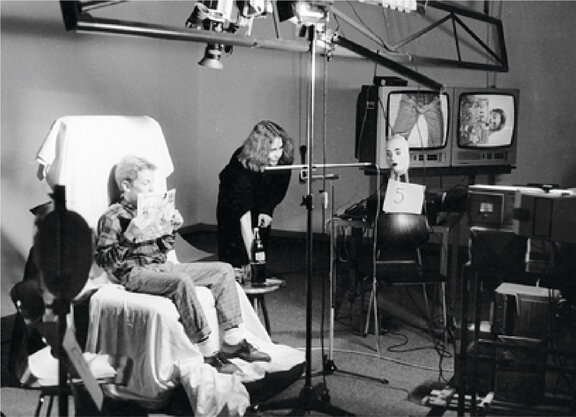
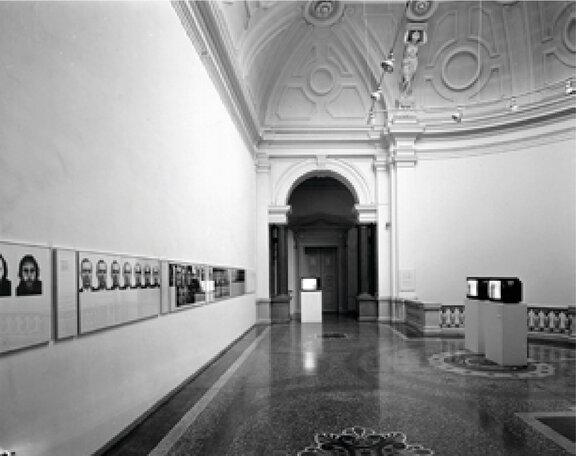
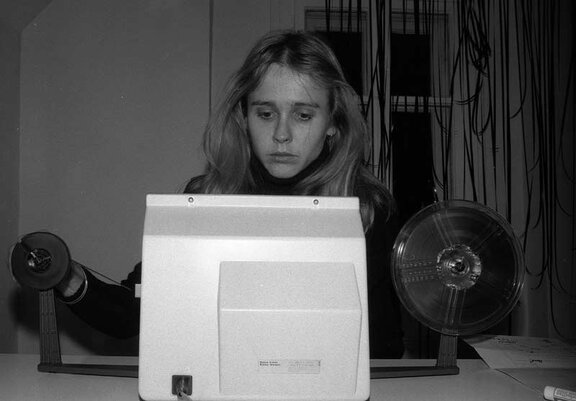
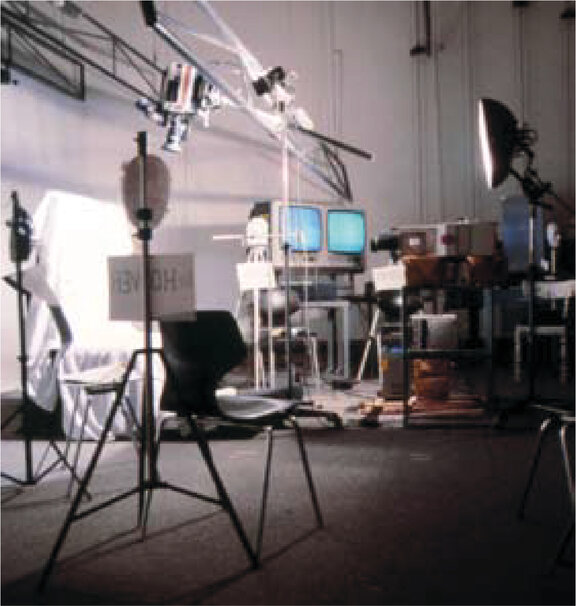
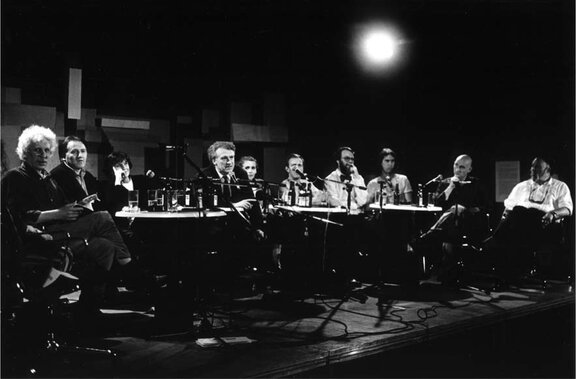
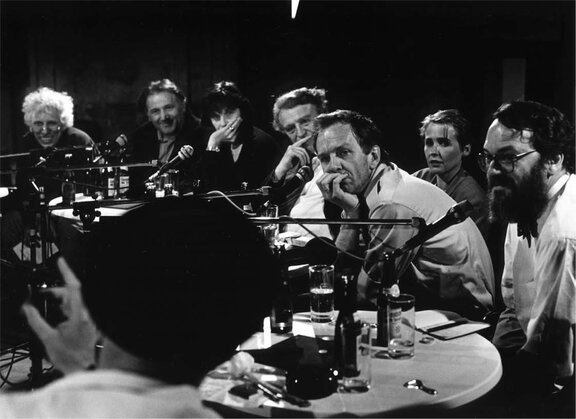
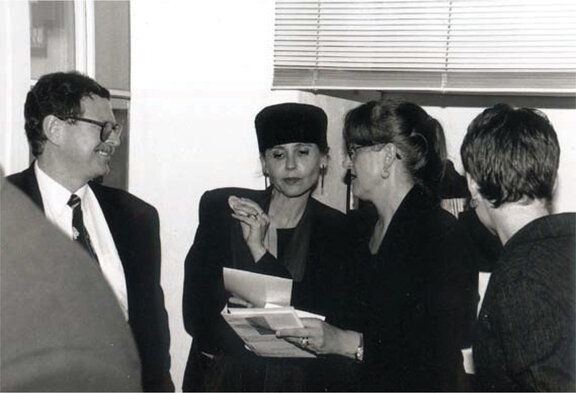
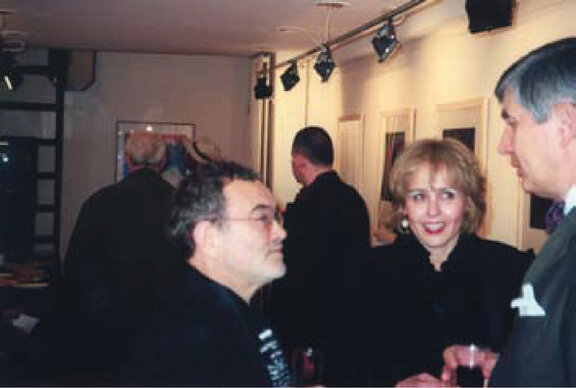
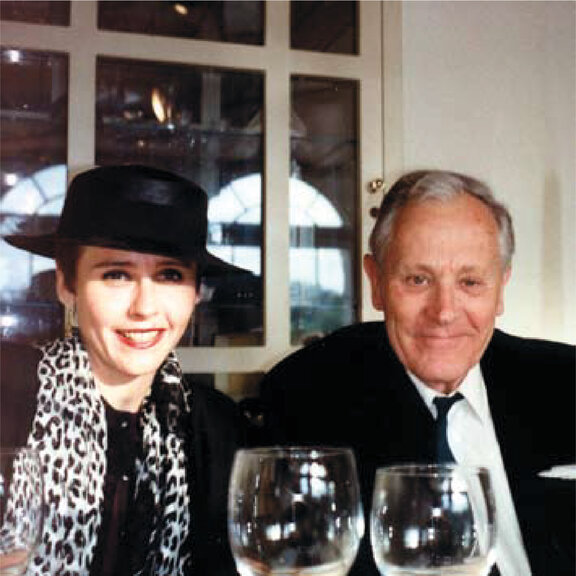
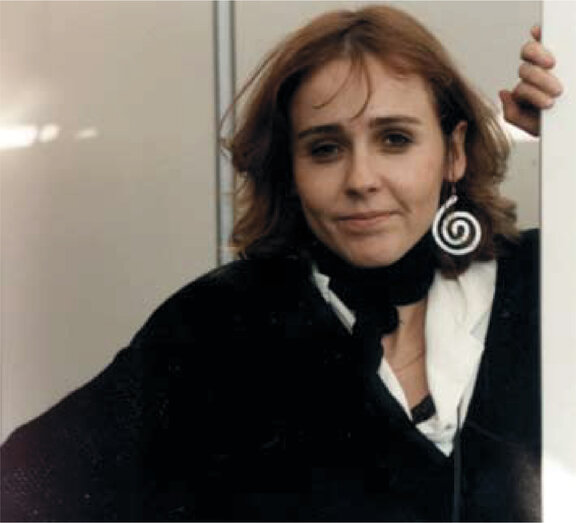
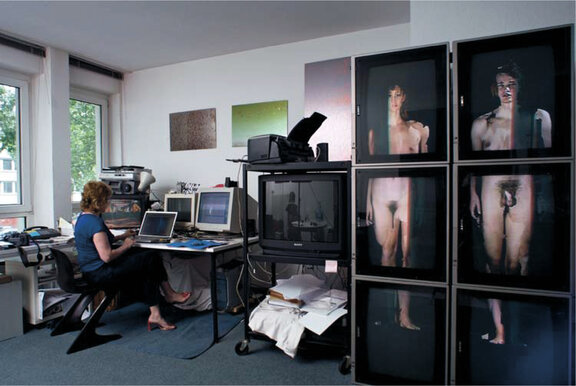
Franziska Megert’s works emerge through a complex and labor-intensive production process characterised by the deliberate application of contemporary media technologies. Drawing on both self-generated and appropriated visual material, she first develops distorted and transformed images that challenge conventional modes of perception. Her compositional strategies include cross-fading, fragmentation, the sequential arrangement of human bodies, and the use of chromatic contrasts through positive–negative inversions. In a subsequent stage, these visual configurations are complemented by carefully integrated sound, resulting in multilayered video works.
Rather than seeking to represent the visible world, the artist employs the medium of video to reveal underlying structures and to render complex interrelations perceptible. Her works explore the capacities of moving images to articulate what remains concealed, inviting viewers to engage with the dynamic interplay between perception, memory, and mediated reality.
1960–1978
EARLY YEARS
Megert was born on the shores of Lake Thun in the canton of Bern under the name Franziska Vogt. During her school years, her family relocated to Stäfa on Lake Zurich, where she attended secondary school before returning to Bern in 1968. There, she completed her secondary education and graduated from high school.
Although both of Franziska Megert’s parents were trained chemists and had no direct affiliation with the arts, her interest in artistic expression emerged at an early age. As a child, she developed a particular fascination with the moving image. Her father regularly documented family life on narrow-gauge film, providing her with an early encounter with cinematic technology. She soon began experimenting independently with his camera, organising and editing the family’s film reels into her first film Oh Mein Papa. Through this process of exploration and self-directed experimentation, she acquired practical knowledge of camera operation, film editing, and the creative possibilities of the medium.
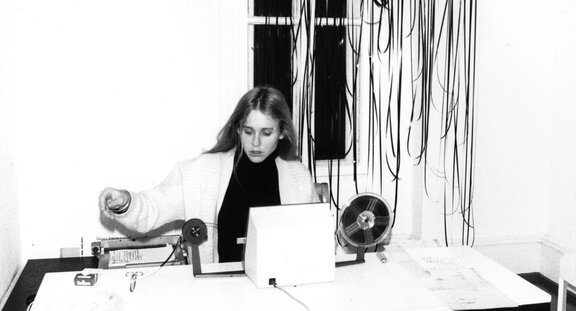
During her years at secondary school, Megert also appeared in minor roles at the municipal theatre and initially aspired to pursue a career as either an actress or a photographer. As these ambitions were not supported by her parents, she instead enrolled in psychology at the University of Bern, where she studied from 1971 to 1978. While this academic path diverged from her original artistic aspirations, her interest in human perception, behaviour, and interpersonal relationships would later become a significant conceptual foundation of her artistic practice.
During this period, the artist met her future husband, the artist Christian Megert. Their initial contact was established through Christian Megert’s brother, whom Franziska Megert had encountered during a stay in the United States. As part of her studies, she worked with children at a summer camp, where she met him on the journey to the camp. He was teaching visual communication at Ohio State University at the time. This encounter developed into a friendship. In 1972, after her return to Bern, she met Christian Megert, and shortly thereafter the two began a relationship. They subsequently moved in together in the Matte district of Bern’s Old Town.
When Christian Megert was appointed in 1976 to the Düsseldorf Academy of Fine Arts, Franziska Megert also began commuting between the two cities. After completing her degree in psychology, the couple moved to Düsseldorf, to Drakestrasse 7, into the former studio of artist Dieter Roth and later of Herbert Oehm. Until today the couple lives and works in Düsseldorf and Bern. With few interruptions, their artistic life has unfolded between these two cities.
During her years at secondary school, Megert also appeared in minor roles at the municipal theatre and initially aspired to pursue a career as either an actress or a photographer. As these ambitions were not supported by her parents, she instead enrolled in psychology at the University of Bern, where she studied from 1971 to 1978. While this academic path diverged from her original artistic aspirations, her interest in human perception, behaviour, and interpersonal relationships would later become a significant conceptual foundation of her artistic practice.
During this period, the artist met her future husband, the artist Christian Megert. Their initial contact was established through Christian Megert’s brother, whom Franziska Megert had encountered during a stay in the United States. As part of her studies, she worked with children at a summer camp, where she met him on the journey to the camp. He was teaching visual communication at Ohio State University at the time. This encounter developed into a friendship. In 1972, after her return to Bern, she met Christian Megert, and shortly thereafter the two began a relationship. They subsequently moved in together in the Matte district of Bern’s Old Town.
When Christian Megert was appointed in 1976 to the Düsseldorf Academy of Fine Arts, Franziska Megert also began commuting between the two cities. After completing her degree in psychology, the couple moved to Düsseldorf, to Drakestrasse 7, into the former studio of artist Dieter Roth and later of Herbert Oehm. Until today the couple lives and works in Düsseldorf and Bern. With few interruptions, their artistic life has unfolded between these two cities.
1978–1980
FIRST ARTISTIC WORKS
During her studies, Megert initially used her camera for documentary purposes, beginning with the photographic documentation of her husband’s artworks. Among these were numerous mirror objects that posed particular challenges for photographic representation, as they reflected their surroundings, the camera, and the lighting conditions. Their adequate documentation therefore required a high degree of technical sensitivity and photographic skill. Through this sustained practice, the artist gradually developed increasing confidence and technical proficiency in working with the medium. She subsequently established her own black-and-white darkroom, which accompanied her between Bern and Düsseldorf, further consolidating her practical engagement with photographic processes.
Franziska Megert soon began to explore photography as an artistic medium. She started experimenting with the cross-fading of photographic portraits, an approach that resulted in her first autonomous works. During this period, she also developed a growing interest in video. Of particular fascination for her was its capacity to represent time-based processes. Her earlier practice of superimposing images in photography can be understood as a conceptual precursor to her engagement with video, in which images are no longer blended into one another but presented sequentially, thereby articulating duration, movement, and temporal progression. As the artist has stated, “Electronic images are space, time, and movement; video is immaterial and transient. Psychological processes and electronic images share structural similarities. That is one reason why I explore this medium,” thus clearly articulating the conceptual focus of her early photographic and video-based practice.
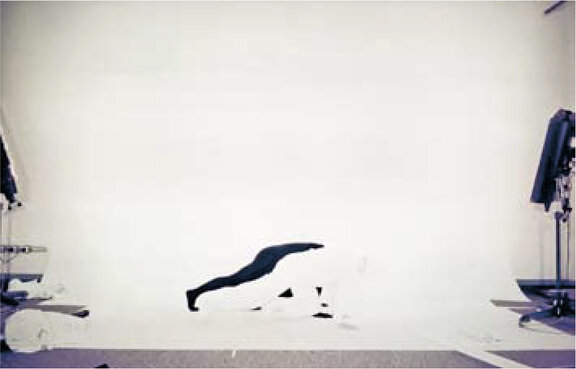
From 1979 to 1980, Megert attended courses in film, video, and photography at the Kunstakademie Düsseldorf, where she gained access to emerging technical developments in the field. Through instruction from Ursula Wevers, she became familiar with the technical and artistic possibilities of video, which increasingly shaped the visual realisation of her ideas. In addition, she studied under Nam June Paik, widely regarded as the first professor of video art at a European art academy.
During this period, Franziska Megert became increasingly integrated into artistic networks. Through her own contacts as well as through Christian Megert’s position as a professor at the academy, she engaged in exchanges with a range of artists. The couple frequently hosted visitors at their home, including artists such as David Bill, Stephan Hargu and Jef Verheyen.
In her own work, Megert drew inspiration from René Magritte, particularly his exploration of spatial fragmentation and perceptual ambiguity. Another key influence was the video artist Peter Campus, who, like the artist had initially studied psychology before turning to art. His work critically examines questions of identity and self- perception. In particular, his video works of the 1970s provided a significant source of inspiration for Franziska Megert’s own practice.
The 1980s
VIDEO WORKS
In the 1980s, the artist increasingly focused on video as a medium and turned her attention to the human body as a central subject. In 1980, she began producing both documentary and experimental video works. In 1981, she developed videotapes that further elaborated her earlier cross-fading technique, while in 1984 she realised her first video installations. Parallel to this, she also worked with Super 8 and 16 mm film. From 1986 onwards, she expanded her practice to include laser-print collages for project designs.
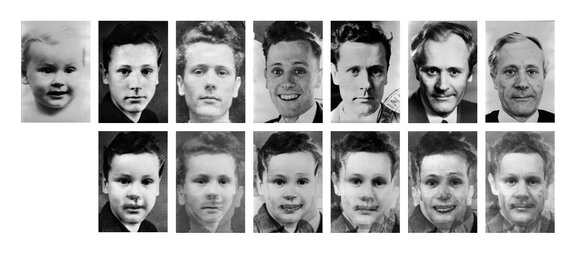
For her first solo exhibition in 1982 at the Kunstmuseum Bern, Franziska Megert established a dialogue between photographic series and video works. In Ontogenesis–Phylogenesis, she employs the superimposition of video footage onto photographic imagery. The work presents a portrait series of a man whose life stages, from childhood to old age, are represented in seven sequential photographs. In the accompanying video, these images are cross-faded, resulting in a transparent composite portrait in which multiple temporal layers are rendered simultaneously visible.
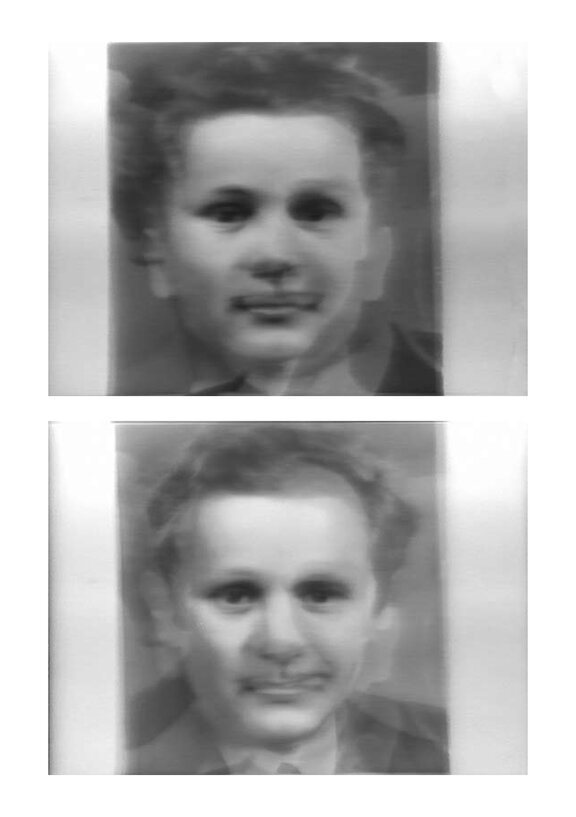
Franziska Megert
Personality – Syntality
One channel video, 18´, b/w, no sound
1981
Franziska Megert
Personality – Syntality
One channel video, 18´, b/w, no sound
1981
The principle of combining individual physiognomies through superimposition recurs throughout Megert’s oeuvre. In Personality–Syntality (1980/81), she constructs a composite group image, while in Totentanz (1982) she overlays her own portrait with the image of a skull. In both photographic and video works, the translucency of the source material is essential, allowing the layered images to remain perceptible. Through this technique, the artist explores psychological themes such as the integration of divergent traits within the individual and questions of transience and mortality.
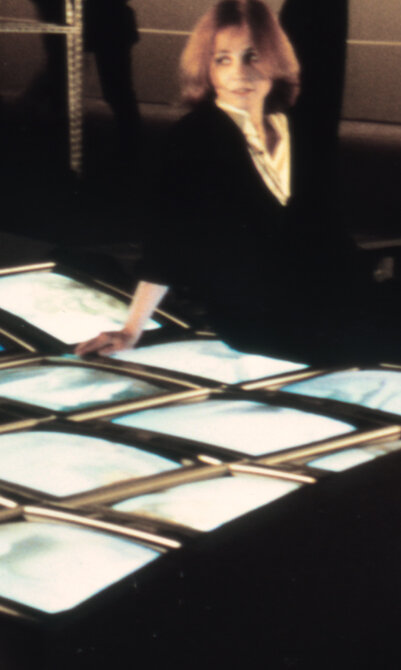
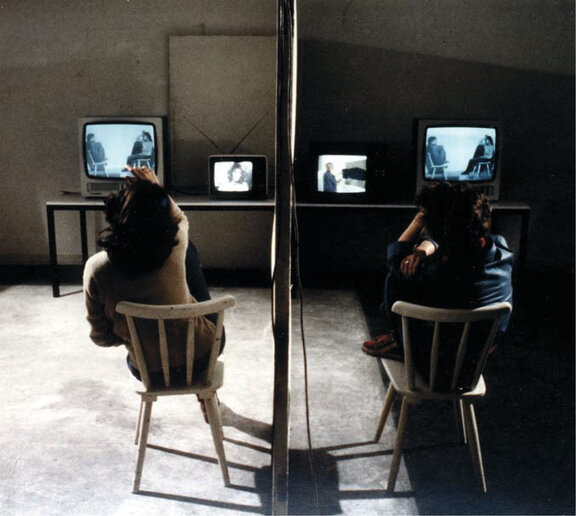
Not only the image production but also the spatial presentation of her video works plays a central role in Franziska Megert’s practice. Initially, she presented videos in conjunction with photographic works, thereby foregrounding their material and procedural basis. Later, she developed spatial installations in which multiple monitors were arranged sculpturally within the exhibition space. A notable example is Sweet Dressing (1984), a video sculpture that extends the action of the video into the physical space of the installation.
At first glance, the video appears to consist of abstract forms; however, as the sequence unfolds, it becomes apparent that it depicts two people dressing. The sound of a train station forms an acoustic backdrop. The scene conveys a moment of intimacy between a couple, who prepare for the day together and part after a brief farewell kiss. Their bodies are rendered as negative images against a blue background, while the installation space itself is also suffused with blue. Alongside the monitor, two chairs are placed, each with garments draped over their backs. In this way, the boundaries between simulated and real space are deliberately blurred.
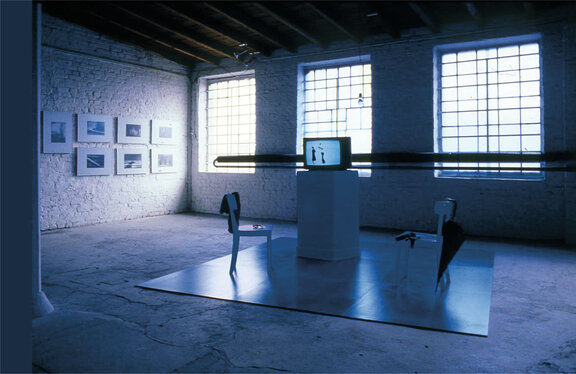


Franziska Megert
Sweet Dressing
Single channel Video, Version 1:3´
1983
Franziska Megert
Sweet Dressing
Single channel Video, Version 1:3´
1983
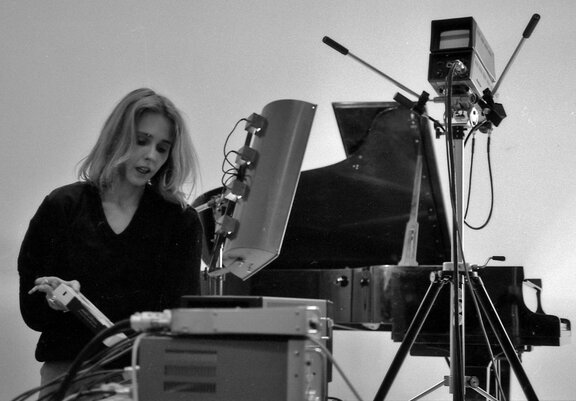
Franziska Megert’s practice seeks to render intrapsychic processes visible, frequently employing the reversal of positive and negative image values as a key visual strategy. This is not only evident in Sweet Dressing, but also in works such as Plus–Minus (1982), Schachmatt (1983), Opusculum II (1984), Creazione (1985), and Klaviersolo für Video (1985/86). The inversion of tonal values produces a shifted perceptual field that challenges processes of recognition and interpretation. In the artist’s view, her works function as instruments for the precise observation of subtle psychological and perceptual processes, grounded in carefully constructed staging. During the 1980s, questions of corporeality and emotionality increasingly came to the fore in her practice.
Franziska Megert’s practice seeks to render intrapsychic processes visible, frequently employing the reversal of positive and negative image values as a key visual strategy. This is not only evident in Sweet Dressing, but also in works such as Plus–Minus (1982), Schachmatt (1983), Opusculum II (1984), Creazione (1985), and Klaviersolo für Video (1985/86). The inversion of tonal values produces a shifted perceptual field that challenges processes of recognition and interpretation. In the artist’s view, her works function as instruments for the precise observation of subtle psychological and perceptual processes, grounded in carefully constructed staging. During the 1980s, questions of corporeality and emotionality increasingly came to the fore in her practice.
Franziska Megert’s practice seeks to render intrapsychic processes visible, frequently employing the reversal of positive and negative image values as a key visual strategy. This is not only evident in Sweet Dressing, but also in works such as Plus–Minus (1982), Schachmatt (1983), Opusculum II (1984), Creazione (1985), and Klaviersolo für Video (1985/86). The inversion of tonal values produces a shifted perceptual field that challenges processes of recognition and interpretation. In the artist’s view, her works function as instruments for the precise observation of subtle psychological and perceptual processes, grounded in carefully constructed staging. During the 1980s, questions of corporeality and emotionality increasingly came to the fore in her practice.
Franziska Megert
Creazione
Single channel video, 4,5´
1985
Franziska Megert
Creazione
Single channel video, 4,5´
1985
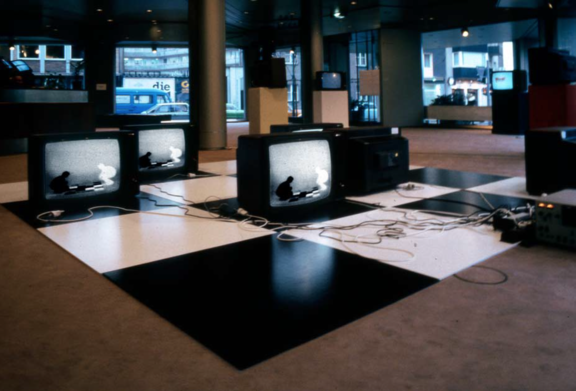
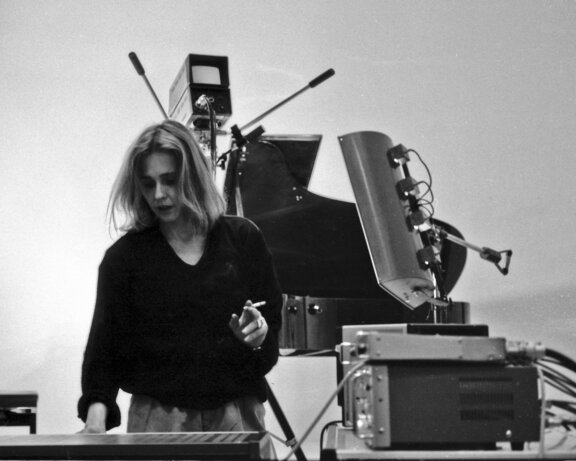
on "The Second East-West Photo-conference European Exchange"
Wrocław, Poland 1991
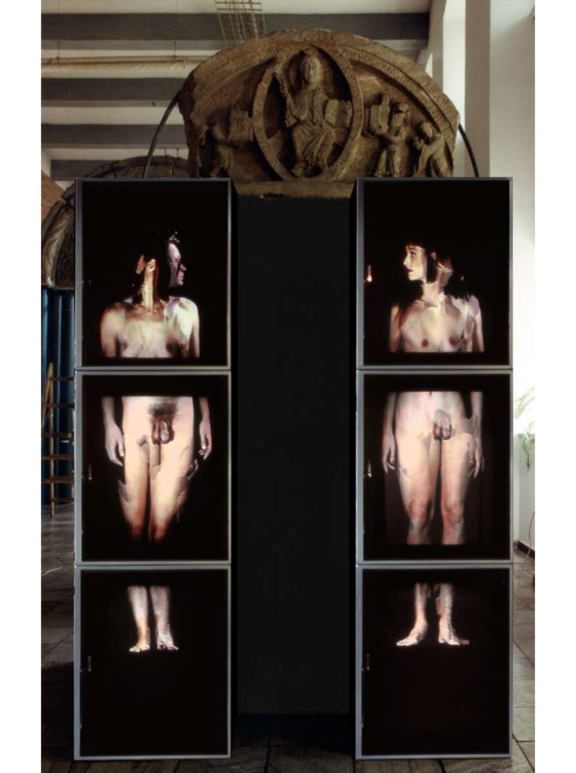
In Das Spiel mit dem Feuer (1989), Megert explores the tension between the sexes through a combination of artistic strategies. On three vertically stacked monitors, the fragmented image of a female body appears, each screen presenting a section that together forms a complete figure. A corresponding male figure appears in a second video sculpture. Flames traverse both bodies, seemingly consuming and dissolving their images. This effect is achieved through rapidly shifting cross-fades and flickering sequences, while the auditory layer reinforces the visual impression through the sound of crackling fire.
Rather than depicting destruction, the work suggests transformation: within the flames, the bodies of the opposite sex repeatedly reappear. The encounter is marked by desire and intensity, yet it remains unresolved, as the figures do not merge but are instead consumed within the dynamic of the fire. In this way, the artist constructs an image of Eros that is at once erotic and self-annihilating. The notion of Eros refers both to sensual desire and to the Greek god of love. Mythological references recur throughout Franziska Megert’s oeuvre, as seen in works such as Phylogenese (1982), Arachne–Vanitas (1991), Philemon & Baucis (1992/93), and Die Engel und die andern / Join the Party (1999/2000). In these works, Megert assumes the role of a visual storyteller, employing video as a medium to activate archetypal and mythological imagery that reaches back into cultural and psychological deep time.
Franziska Megert
HIEROS-GAMOS
Single channel video, 7,5´
1986
Franziska Megert
HIEROS-GAMOS
Single channel video, 7,5´
1986
The 1990s
COMPUTER ANIMATIONS
Franziska Megert’s engagement with mythological and art-historical imagery also characterises her work of the 1990s. During this period, her focus shifted from the representation of “psychic space” toward the construction of immaterial, fictional spatial environments generated through computer-based processes. From the early 1990s onwards, she began to manipulate video material digitally, initially for the purpose of post-production editing. From 1995, she expanded her practice to include computer-generated animation and graphics.
Already in the early 1990s, the artist demonstrated a strong interest in technological innovations in the field of digital imaging. Upon learning of the high-performance computers and a 1 GB external hard drive at the Städel School in Frankfurt, she travelled there to work directly with the equipment. However, it was only with her third Macintosh G4 and newly available 3D software in 1995 that she was able to independently produce computer animations of several minutes in duration.
One such project was a four-minute virtual tour through an exhibition of Christian Megert’s mirror objects and sculptures. Throughout her career, Megert has consistently documented her husband’s work. Accordingly, it is unsurprising that she also integrated emerging technical tools into this documentary practice.
In Hommeage (1996), Franziska Megert employed computer animation to construct a fictional space based on art-historical imagery. She assembled approximately 200 representations of female nudes from European painting spanning five centuries. These figures – depicting reclining, seated, and standing poses – were standardised in scale and recomposed into a complex architectural structure. The resulting computer- animated environment forms a labyrinth of corridors, halls, and staircases through which a subjective camera navigates.
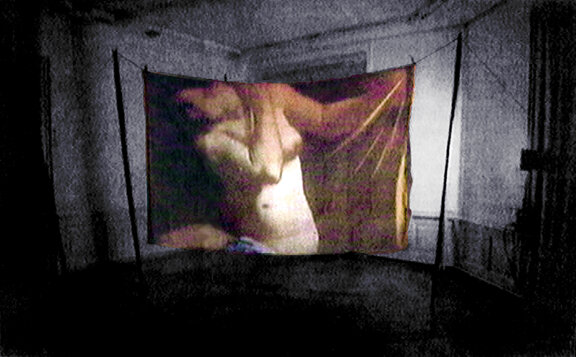
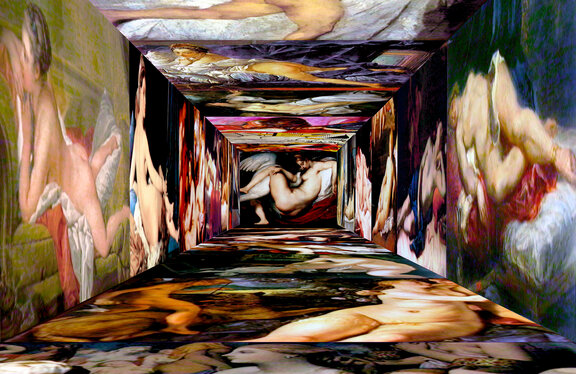
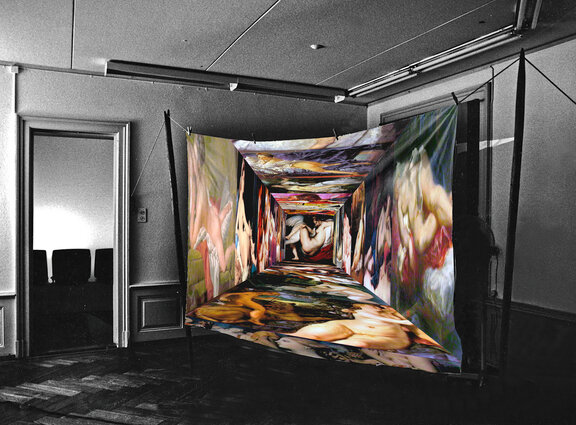
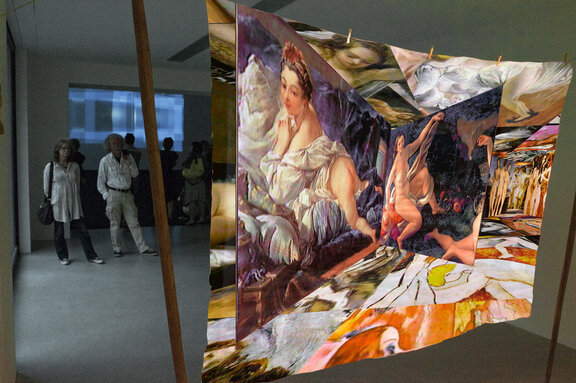
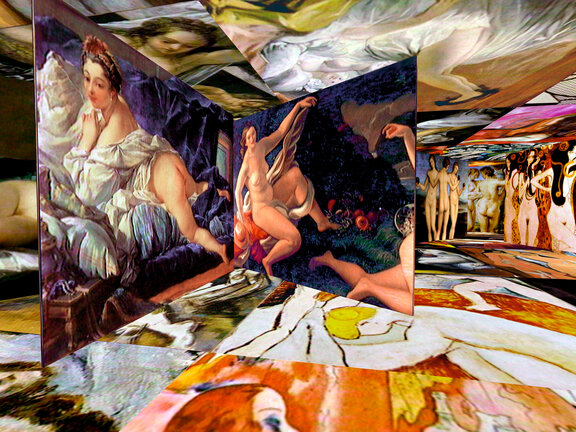
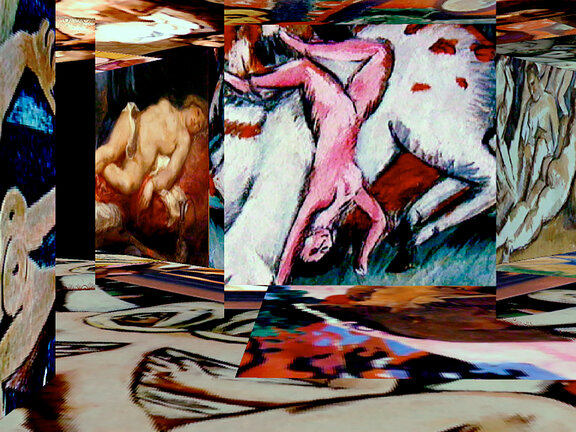
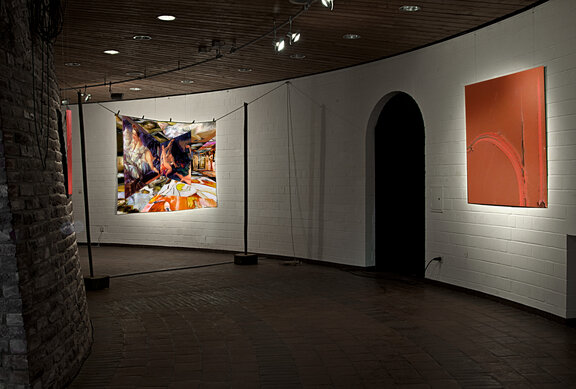
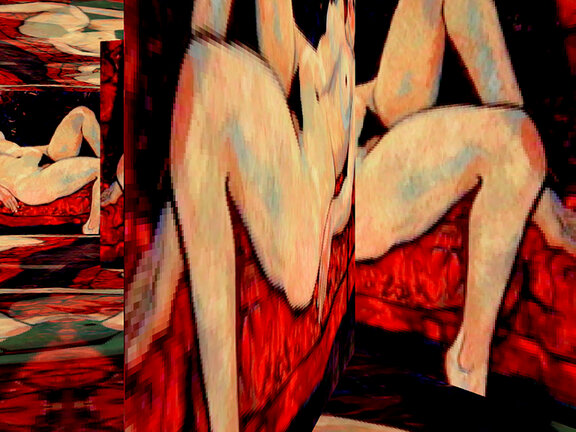
The video installation was projected onto a white textile surface and accompanied by a soundtrack composed of female voices. The artist sourced these recordings from feature films and subtly modified them through echo effects that resonate with the architectural logic of the labyrinth. The combination of the female voice and the repeated depiction of the female nude generate an atmospherically charged space that critically reflects the historical representation of the female body in Western art and stages the gaze of the European male artist.
The intricate spatial construction of this work can also be understood in relation to Megert’s engagement with computer-based architectural processes. During the 1990s, she collaborated with architects in the field of computer-aided design, which led to an intensive exploration of spatial modelling and 3D animation.
For the Berlin based architectural office Ortner & Ortner Baukunst, the artist developed visual renderings for the facade and interior design of the Saxon State Library in Dresden. This was one of the first large-scale comparable projects. Franziska Megert had a crucial role in the application of this imaging method. This applied work also fed back into her artistic production, where she continued to explore digitally generated spatial constructs: Fictional, computer-animated environments recur in works such as Die Engel und die andern / Join the Party (1999/2000), Die Stadt der Unsterblichen (1998/2001), and The Ultimate Relaunch (2002/2007).
In addition to her artistic practice and her ongoing documentation of Christian Megert’s work, Franziska Megert also held teaching positions. From 1993 to 1994, she served as visiting professor at the École nationale supérieure des beaux-arts in Paris. In 1994, she delivered lectures at the Université du Québec and Concordia University in Montréal.
2006
INTERACTIVE INSTALLATIONS
Megert understands the role of art as a critical engagement with social and political structures. Drawing on the possibilities of media technology, she seeks to construct alternative forms of reality. In her interactive installations, both realised in 2006, experience and action converged into a single, integrated field of perception.
In Gamester’s Play (2006) and Klagemauer & Beichtstuhl der Zukunft (2006), Franziska Megert developed a combination of hardware and software that functioned as a fully operational laptop on a monumental scale of approximately 1:30. The keyboard could be either projected or physically activated, enabling viewers to directly intervene in the work by moving across its surface. In response, text and images were generated on the screen, while sound was activated within the exhibition space. In Klagemauer & Beichtstuhl der Zukunft, visitors were additionally invited to input their own texts and confessions, which may be rendered publicly accessible via the internet.
Through these interactive environments, the artist reflects on the conditions of the digital age and examines the implications of an increasingly digitised world for artistic practice and production. By actively incorporating the viewer into the work, she challenges traditional notions of artistic authorship and creative authority. In this sense, her practice engages with the idea that, within the context of networked media culture, the role of the artist becomes decentralised; opening up the possibility that artistic agency may be shared and redistributed among participants.
SINCE 2008
BACK TO PHOTOGRAPHY
In 2008, Franziska Megert initiated the photographic series Benchmarks, marking a return to photography – the medium with which her artistic practice had originally begun. The subjects of these works are found during extended urban walks, where she observes traces of material decay on once precisely manufactured, weather-resistant surfaces of metallic objects such as waste containers, mailboxes, and car body panels. The artist captures these subtle yet persistent forms of deterioration, in which the passage of time becomes inscribed into surfaces marked by scratches, dents, and abrasions.
To achieve an effect reminiscent of photorealistic painting, Megert employs a high- resolution digital imaging process. The selected fragments of surface damage are enlarged far beyond their original scale, revealing their material and pictorial complexity. The resulting images are printed onto high-gloss metallic plates, which further enhance their visual density and tactile presence. Through this process, the artist aestheticises the overlooked and everyday.
At the same time, the series engages with questions of temporality. While the representation of time is traditionally associated with the moving image, photography is conventionally understood as the capture of a singular moment. In Benchmarks, Megert addresses this tension explicitly. Notably, her video works often employ strategies such as repetition, superimposition, and slow motion to evoke a sense of temporal suspension and stillness. Across both media, she develops a distinct artistic approach that interrogates and expands their respective conditions of expression, thereby reflecting on the specific properties of the photographic and the moving image.
CONCLUSIO
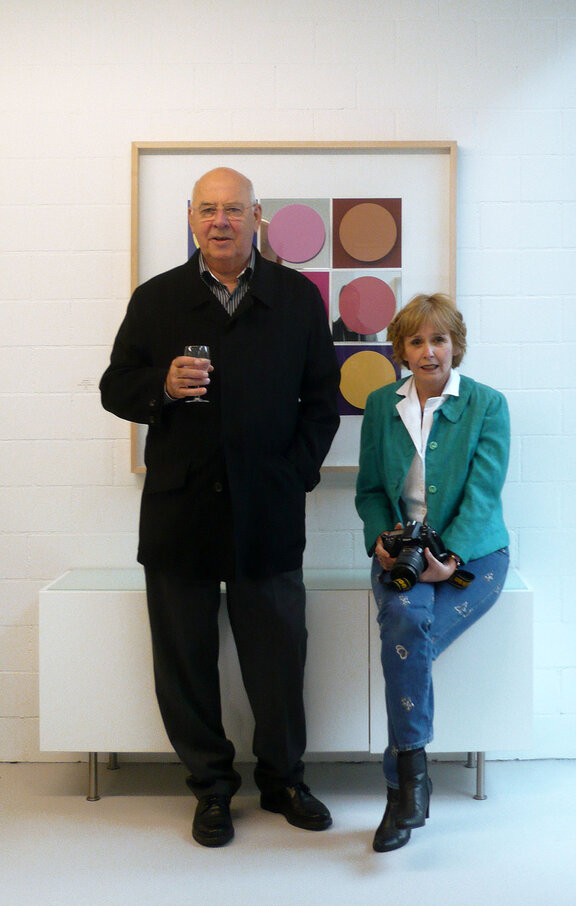
Franziska Megert’s work quickly gained international recognition. Throughout her artistic career, she has been represented in numerous solo exhibitions and retrospectives. For example, in 1982 at the Kunstmuseum Bern, in 1994 at Kunstverein Schwerte in Weingarten, 2008 at Museum Kunstpalast in Düsseldorf, 2011 at Teloy Mühle in Meerbusch, 2016 at Arc Space in Beijing and in 2023 at the Kunsthaus Zofingen. In addition, her work has been shown at a range of international video and film festivals and are included in the collection of the ZKM Karlsruhe.
Megert’s oeuvre engages centrally with an experimental interrogation of the meaning and epistemological status of the image. Across her entire practice, a sustained exploration of the technical conditions of camera-based media remains a defining constant. She employs these means to render visible subtle psychological processes and configurations of human relationships, while simultaneously embedding her work in a continuous reflection on the media themselves. By critically engaging with the possibilities of media technology, the artist seeks to articulate not only an artistic but also a social reality in which forms of power dynamics and perception are reconfigured and expanded.
Dr. Anja Grossmann
Dr. Anja Grossmann
Dr. Anja Grossmann